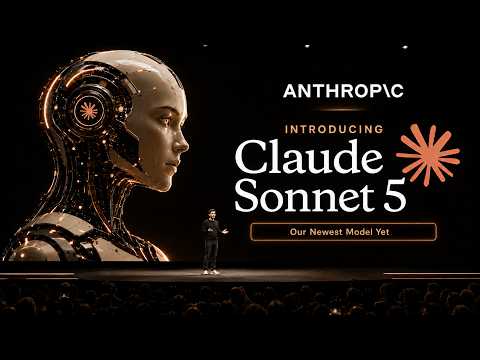
TheAIGRID presents Sonnet 5 as a model for agentic coding and multi-step tasks, comparing it with earlier Sonnet and Opus models. The presenter discusses a large context window and claimed improvements in reasoning, computer useComputer use lets an AI agent interact with software through interface controls such as screens, buttons, keyboards and pointers. and knowledge work, while distinguishing model classes.
The presenter cautions that a lower quoted token price does not necessarily mean lower task costsCost per completed task measures the total AI, tool, infrastructure, retry, and repair expense for each verified useful outcome.. Longer reasoning, tool calls and tokenizationTokenization turns input into discrete units that a model can represent and process. can increase consumption, and the video compares reported benchmark costs with alternatives. These are the presenter’s interpretations rather than independently reproduced testsEvaluation is the systematic assessment of a system's behaviour or results against explicit criteria..
The review considers open-weight GLM 5.2 as a coding alternative and discusses reported differences in safeguards and cybersecurity use. Model comparisons, safety claims and future value are presented as commentary rather than established guarantees.
 Watch on YouTube