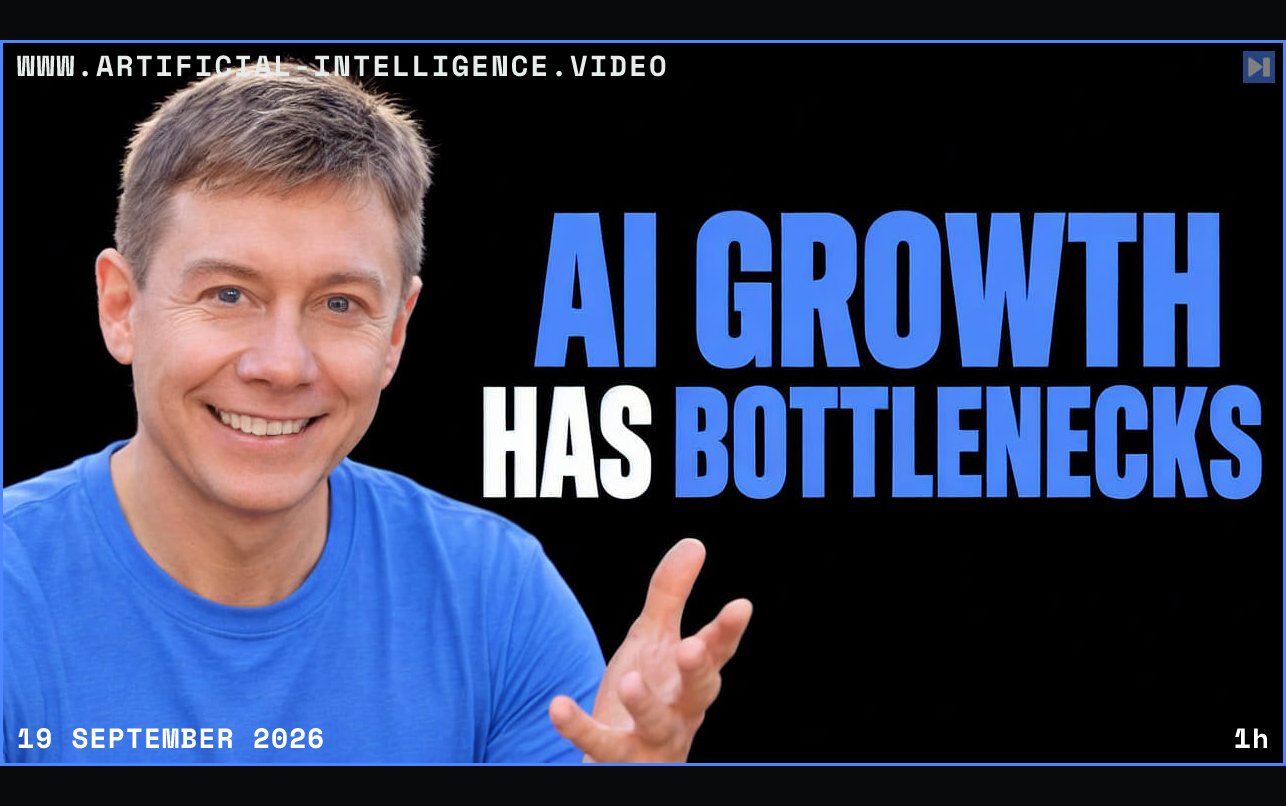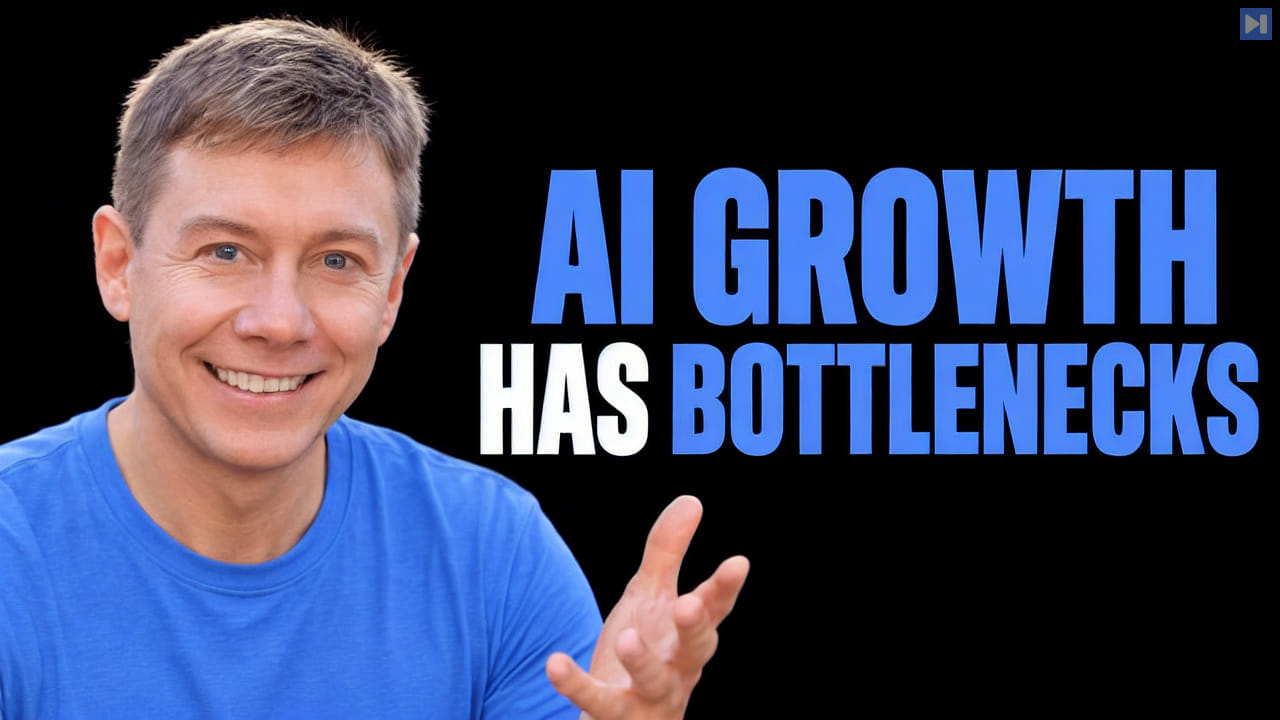
Chad Jones contrasts transformative AI scenarios with the historical stability of economic growth. His weak-links framework treats production as a chain of complementary tasks: making one input dramatically cheaper does not remove the other constraints that determine output.
Chad Jones uses models calibrated to historical automation to explore the balance between research acceleration and persistent bottlenecks. The numerical scenarios illustrate assumptions rather than reliable forecasts, and he distinguishes software progress from the physical and organisational changes needed across an economy.
Chad Jones explains why automating tasks need not eliminate entire jobsTask-level AI automation assigns a defined activity within a larger job or workflow to an AI system. and why abundant output would not automatically produce an equitable distribution of income. Audience questions examine measurement, transition costs, capital ownership and the limits of the model, alongside concerns about meaning and AI riskAI safety is the field and practice of reducing harmful failures, misuse, loss of control, and unintended consequences from AI systems..
 Watch on YouTube