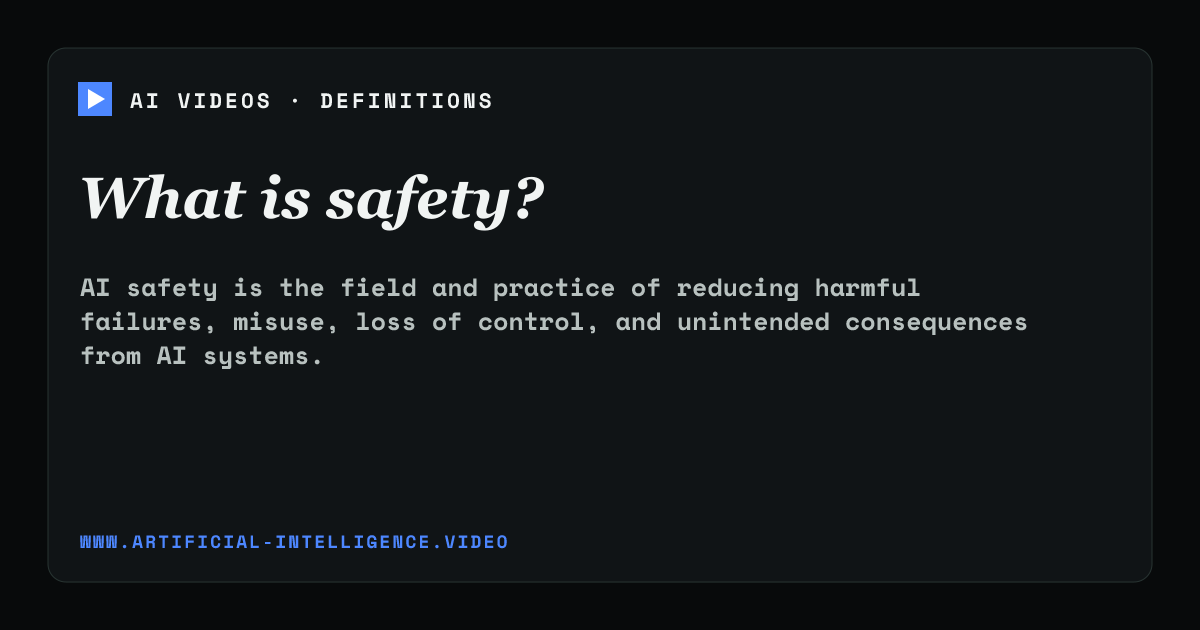
AI safety covers model behavior, system design, permissions, cybersecurity, evaluation, monitoring, human oversight, incident response, and governance. The relevant controls depend on capability, access, deployment context, users, and the scale or reversibility of possible harm.
Safety decisions become harder as capabilities grow because new behaviors and attack paths may appear faster than established controls. Responsible development uses staged evaluation and pauses when critical safeguards are insufficient rather than interpreting progress pressure as evidence that deployment is safe.
ELI5
AI safety is the work of reducing harmful mistakes, misuse, lost control, and unintended consequences from AI systems. It includes how models behave and how the surrounding product manages permissions, security, testing, monitoring, oversight, and recovery.
For example, a capable agent may be tested in a sandbox, given limited tools, monitored for unusual behavior, and required to ask before a consequential action. The exact safeguards should match what the system can do and how difficult any harm would be to reverse.
What does AI safety include?
It includes technical evaluations, access controls, cybersecurity, monitoring, human oversight, recovery, governance, and responsible deployment decisions.
Why might an AI laboratory pause development work?
A pause can create time to strengthen controls when a capability, vulnerability, or deployment path exceeds the current safety boundary.