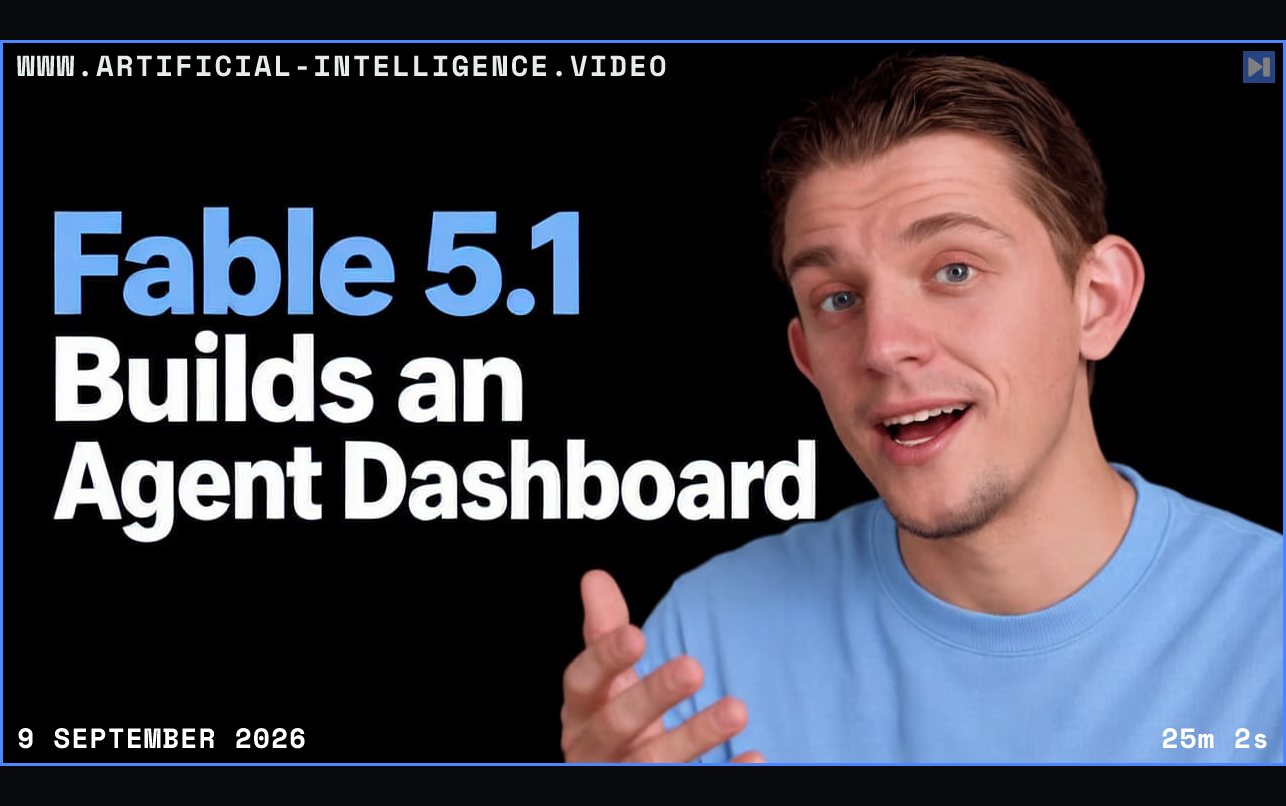
Riley Brown builds a business dashboard with Claude Fable 5.1 in the Claude desktop coding interface. The initial specification describes the platform, a familiar comparison app, user actions, human and agent accounts, visual preferences and a shared database. The intended result is a board where people and connected agents can manage cards and comments with visible attribution.
Riley Brown inspects the generated database structure and checks that creating a user produces a corresponding record before testing agent access. A copied skillAn AI agent skill is a reusable package of instructions, resources, and tool guidance for performing a bounded kind of work. lets another agent connect to the board, register an identity and create cards. Further examples add tasks, populate a new column and leave comments, turning the initial prompt into specific checks of the application's behavior.
Riley Brown also exposes a limitation in agent attribution: bots sharing a skill can appear under the same registered agent identityAn AI agent identity is a persistent, verifiable identifier used to attribute messages, actions, permissions, and history to an agent. rather than each displaying its own name. A later test connects another agent client, adds cards and replies, and checks updates from a separately created human account. These examples show why successful writes and accurate account labels need to be checked separately.
Riley Brown groups several interface problems into a follow-up request after trying the first version. The requested changes cover mobile scrolling, text contrast, excess borders, navigation placement and the appearance of comments. A subsequent formatting issue prompts another targeted correction, so the demonstration includes review and iteration beyond the initial generation.
Riley Brown finishes by asking the coding agentAn AI coding agent is a tool-using AI system that can inspect, modify, and validate software within a repository. to create a repository and deploy the application through Vercel, then reports opening the hosted version and signing in. The tutorial offers a concrete sequence from requirements to database inspection, interaction tests, interface refinement and a shared web address. The demonstrated result supports that workflow, while the video does not establish a comparative benchmark or production-readiness assessment.
 Watch on YouTube