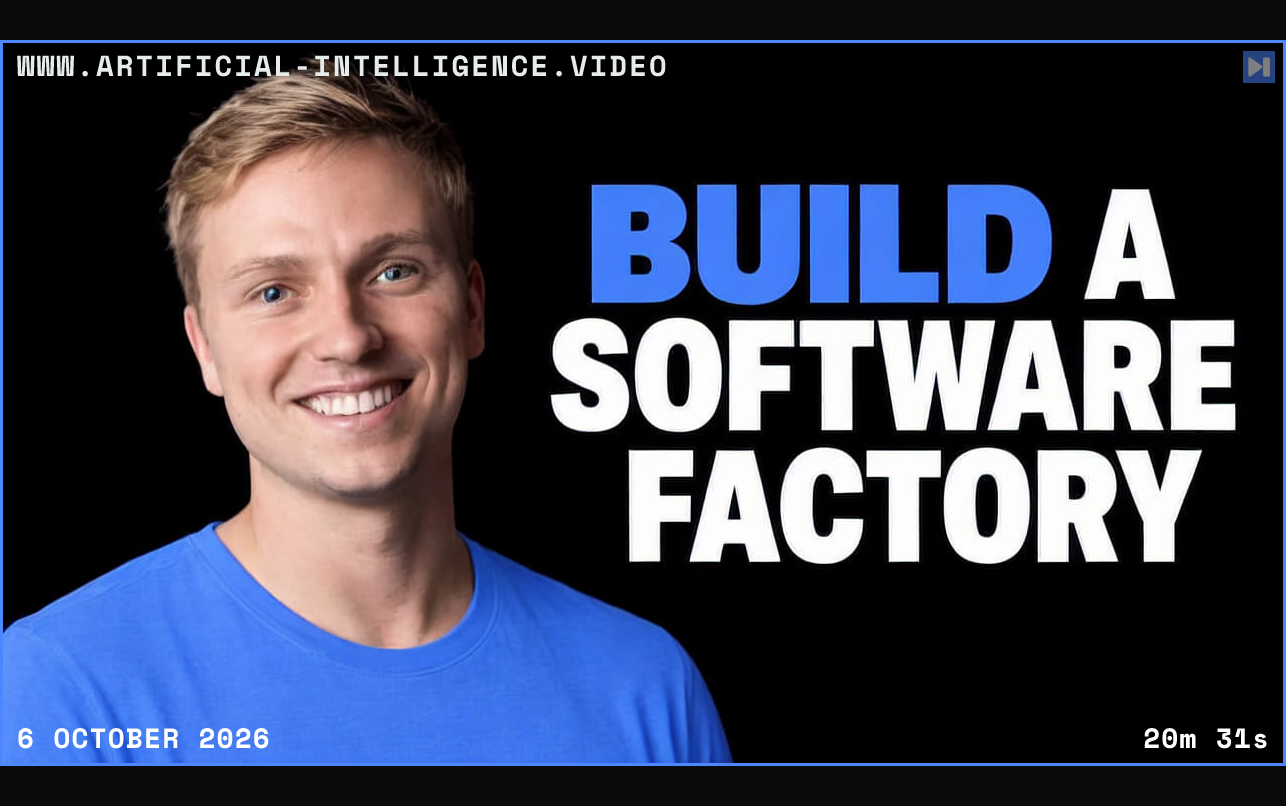
Dru Knox defines a software factoryAn autonomous software factory is a repeatable development system that coordinates agents, tools, checks and human review to turn specifications into verified software changes. as a system in which agents produce the shipped product while engineers improve the machinery around themAn AI agent harness is the software framework that packages a model with tools, instructions, context management, execution controls, and user interaction.. He separates autonomyAgent autonomy is the degree to which an AI agent can choose and execute actions without immediate human direction., the amount of corrective intervention required, from automation, the amount of work teams trust to run without manual review, and treats product quality as a distinct measure.
Dru Knox describes three feedback loopsAn AI feedback loop occurs when AI outputs or their consequences become inputs that influence later model or agent behavior.. Cheap inner-loop checks help coding agents correct work before a pull request; more expensive outer-loop checks support review after submission; a meta loop studies failures, corrections and user feedback to improve the earlier checks. This is a proposed engineering approach, not evidence that every team can remove human oversight.
Dru Knox argues that improvement requires a legible control plane, usable execution environments and governed accessAn agent permission boundary defines and enforces which resources and actions an automated agent is allowed to use. to the tools and services agents need. Shared issues, pull requests and playbooks make mistakes available for analysis, but infrastructure setup, rapidly changing practices and unplanned improvement work remain practical obstacles.
 Watch on YouTube