Ellie Sleightholm introduces the prime-counting problem, the zeta function and the Riemann hypothesis, which predicts that every non-trivial zeta zero lies on a particular critical line. She traces earlier partial results to show why an improved bound is distinct from proving the full hypothesis.
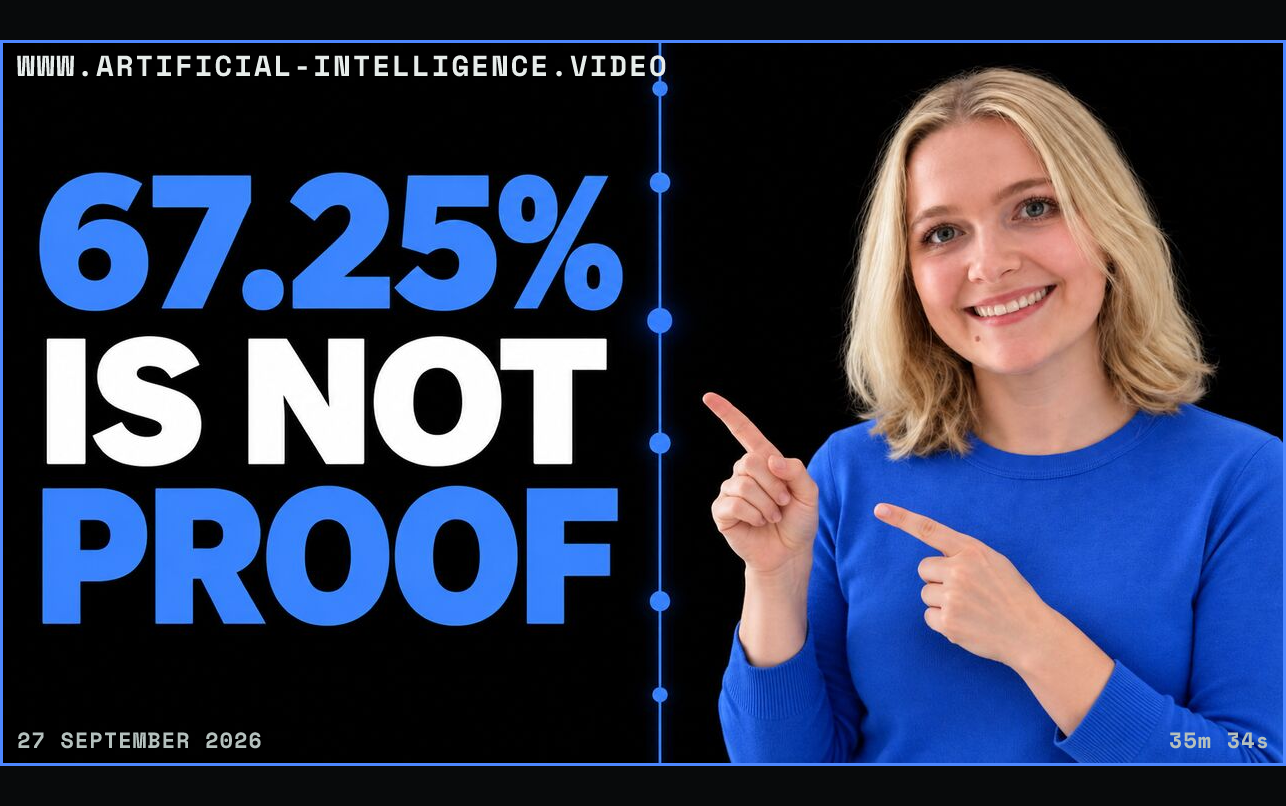
Sleightholm describes Anthropic's report that Claude explored many unsuccessful approaches with coordinated subagents before arriving at an argument for a 67.25% lower bound. She discusses adversarial agent checks, human mathematicians' review and Lean formalization, while stressing that the paper had not completed ordinary peer review at the time of the video.
Sleightholm uses the example of almost all integers being non-squares to explain why even a 100% limiting proportion would not rule out exceptions. She sees promise in AI-assisted mathematics but calls for guardrails, transparent attribution and evidence, time for mathematicians to assess new results, and continuing attention to explanation and understanding.
 Watch on YouTube