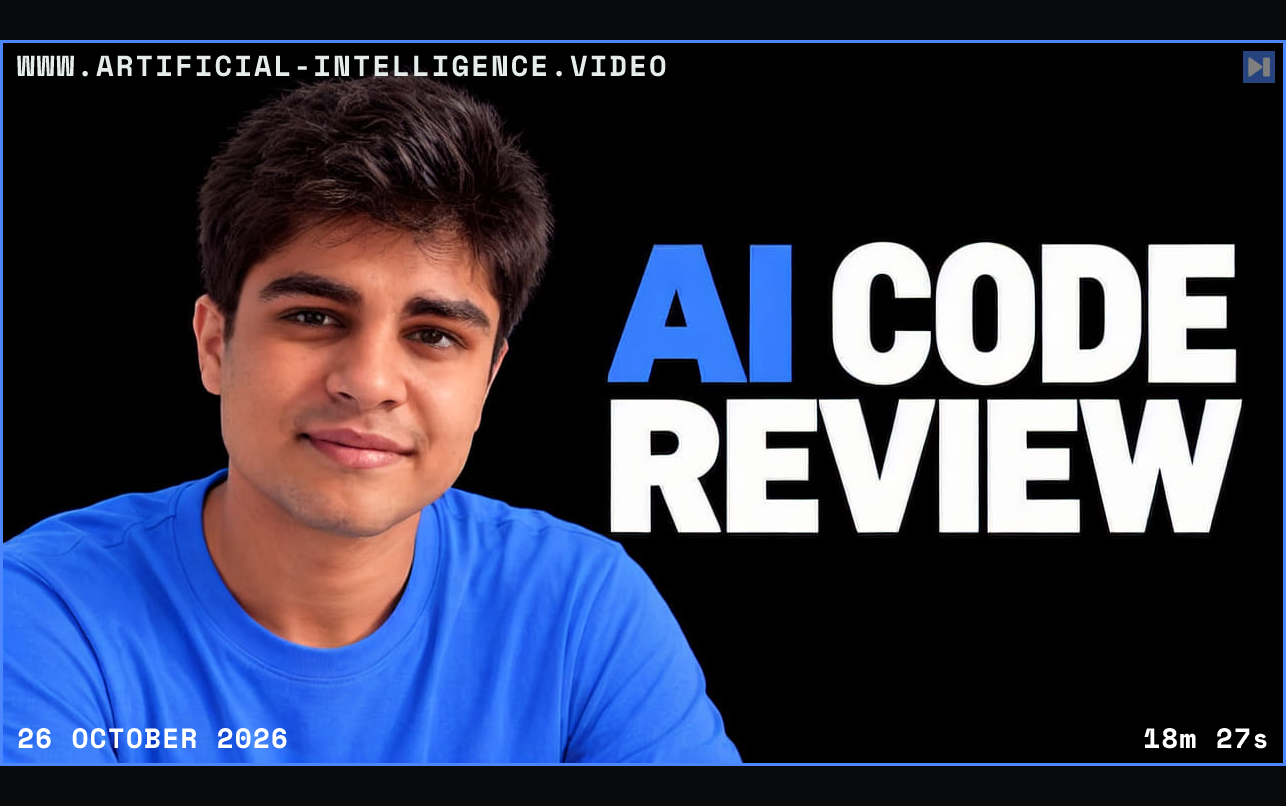
Daksh Gupta explains why a basic pull-request webhook, sandboxed coding agentAn AI agent sandbox is an isolated execution environment that limits which files, processes, networks, credentials, and external systems an agent can access. and review APIAI-assisted code review uses AI to inspect software changes for defects, risks, standards, missing tests, and opportunities for improvement while human reviewers retain responsibility. can produce feedback but still miss important bugs, lack codebase contextRepository context is the relevant source, configuration, history, documentation, dependencies, and worktree state needed to understand a software task. and generate excessive nitpicks. Daksh Gupta recommends focusing review prompts on failure types that matter to the application and evaluating changes against historical incident-causing pull requests.
Daksh Gupta describes using a different model family for review, building a more precise codebase knowledge layer and supplying documentation and tickets to capture author intent. Daksh Gupta distinguishes apparently correct code from code that meets the requested behavior, and explains why a review cannot prove the absence of bugs.
Daksh Gupta then outlines end-to-end testing in dependency-rich environments and routing simpler subtasksModel selection chooses the AI model whose capability, quality, cost, speed, safety, and operating constraints best fit a task. to less expensive models. Daksh Gupta stresses the need to reevaluate those changes against a representative datasetWorkflow-specific AI evaluation tests systems using the tasks, tools, constraints, and outcomes of a real working process.. Catch-rate, cost and product-scale figures remain claims from the presentation; promotional customer examples, product invitations and sweeping claims that testing is solved are omitted.
 Watch on YouTube