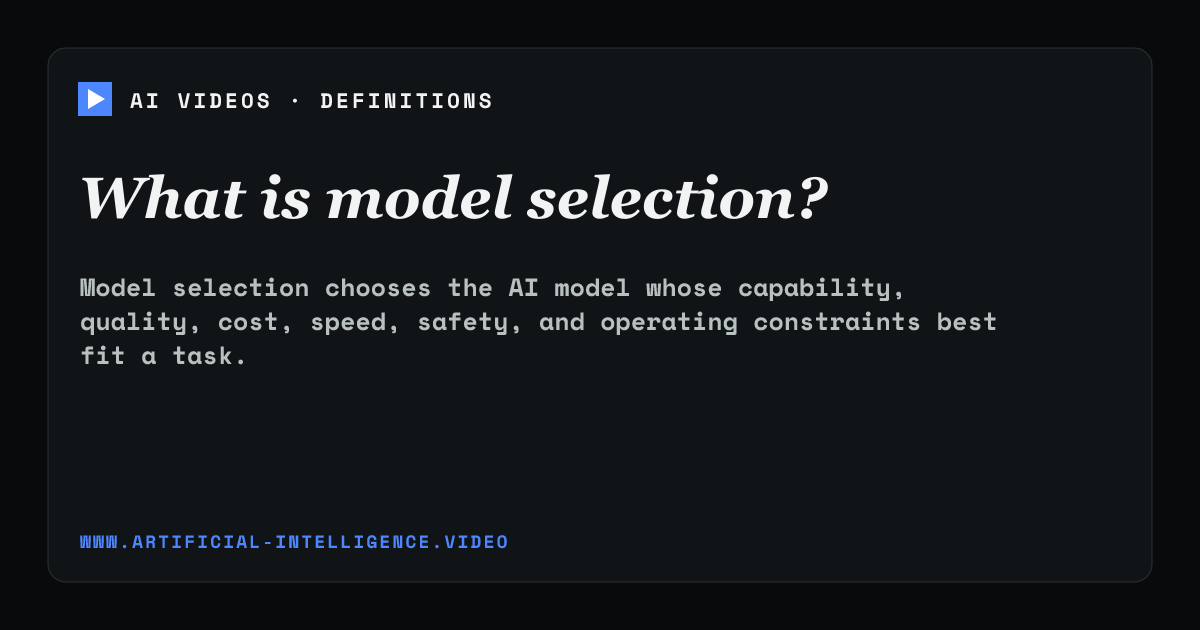
Model selection compares systems using the requirements of an actual workload rather than assuming the newest or highest-scoring model is universally best. Criteria can include output quality, reliability, tools, latency, cost, privacy, context limits, hosting, and provider stability.
Different tasks may justify different models and effort settings. Good selection uses representative tests, explicit priorities, repeated runs, and minimum acceptance thresholds, then revisits the decision when models, prices, or workloads change.
ELI5
Model selection means choosing which AI model is the best fit for a particular job. The choice can depend on what the model can do, how accurate it is, which tools it supports, how much context it can handle, how quickly it responds, and what it costs.
For example, a small fast model may be enough to sort simple messages, while a more capable model may be worth using for a difficult code review. Testing the real workload is important because the most famous or largest model is not automatically best for every task.
What factors matter in model selection?
Quality, reliability, task fit, tools, context, speed, cost, safety, privacy, hosting, provider stability, and support can all matter.
Should one model handle every workload?
Not necessarily. Different workloads may benefit from different capabilities, tools, effort levels, latency, cost, privacy, or reliability profiles.