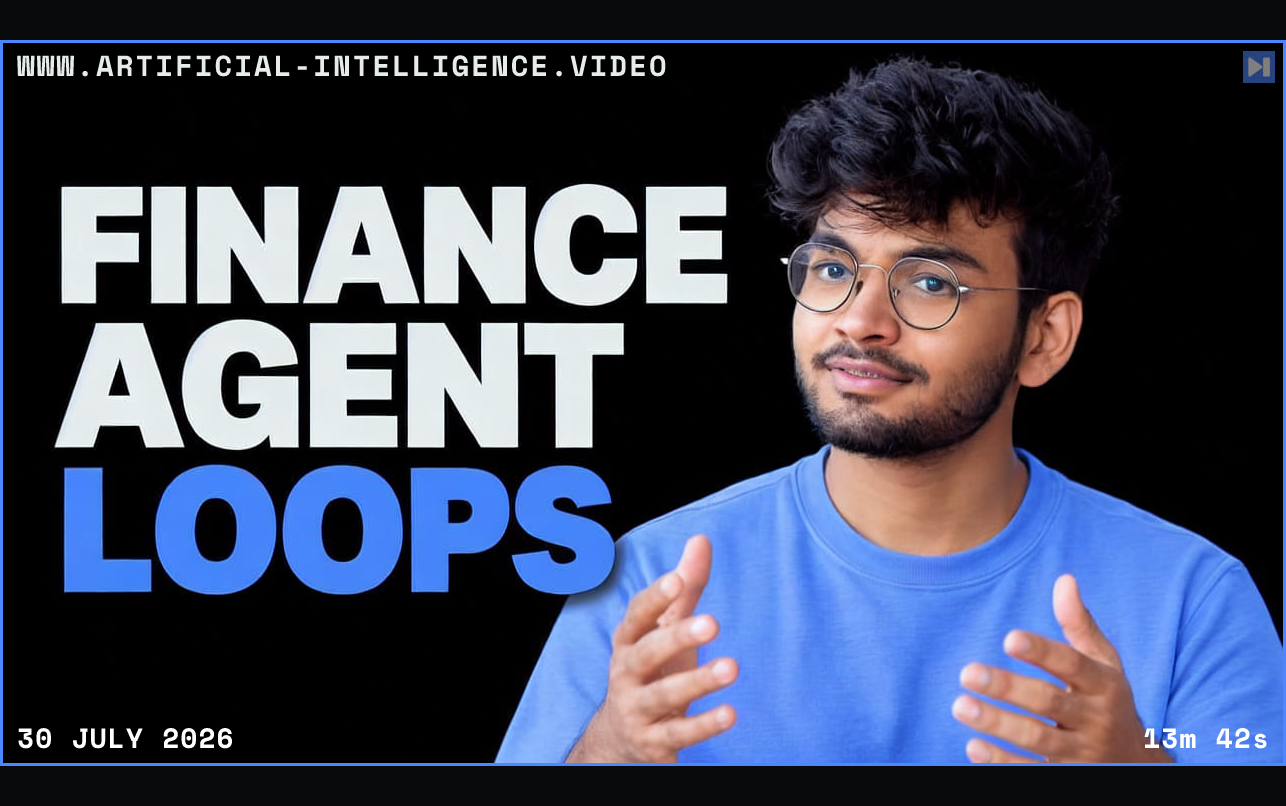
Ramana Siddanth Emani argues that strong model demos often fail when unfamiliar customer data and production bugs enter the picture. He locates a major bottleneck in developer feedback speed rather than model choice alone, and proposes parallel subagents in isolated worktrees, reusable organization skills, connected tools and a compact interface for coordinating work.
His example begins with QA tickets and follows an agent through requirements, logs, root-cause analysis, tests, a proposed fix, a pull request, review and staged deployment. He suggests automating more of that path, while acknowledging that financial software has auditors, controls and a human accountable for approving what reaches production. The transcript describes an architecture and hypothetical flow; it does not demonstrate that the proposed agent safely completes those stages unaided.
He then proposes using recurring failure data to refine the development harness, setting longer-running goals and summarizing repeated customer issues. Although the talk uses the phrase removing the person from the loop, the closing instruction is to keep a human as verifier rather than letting attention limit every step. Any use of customer sessions, logs or production systems would need the organization's own permissions and controls.
 Watch on YouTube