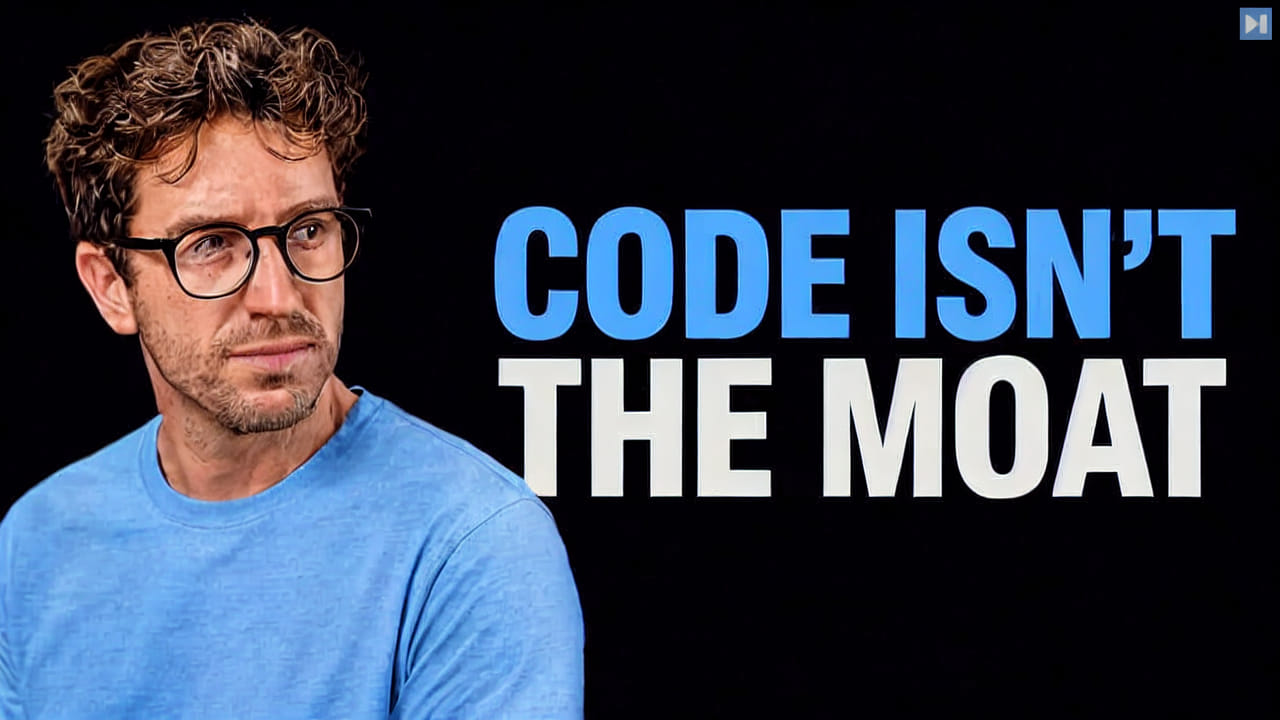
Nate B. Jones describes the first two levels as idea-first building and customer-responsive building. The first is easily disrupted by a new model or product, while the second can become useful by listening closely to customers and changing the implementation without abandoning the problem.
Nate B. Jones adds go-to-market understanding at level three and a defensible domain thesis at level four. Builders at these levels use AI across distribution as well as product development, then combine that reach with detailed knowledge that a general-purpose model provider is unlikely to possess.
Nate B. Jones defines level five as anticipating how agent reliability, tool use, context and other capabilities will change a specific market. Building for the capability expected in six or twelve months can create an advantage that survives individual model launches because it rests on a forecast of the domain rather than one feature.
 Watch on YouTube