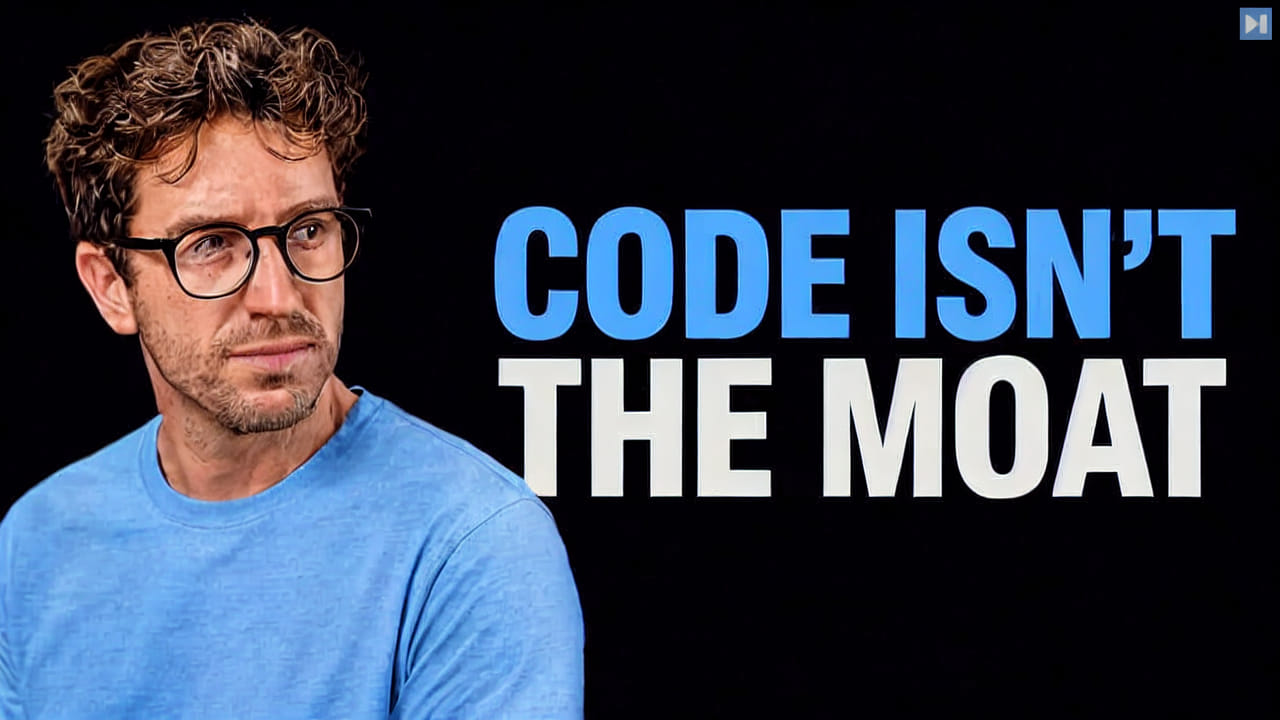
Isenberg rejects the claim that artificial intelligence ends the software business. He expects more software to be created because the addressable market expands when small teams and solo founders can build products that previously required larger engineering organizations.
What changes is the source of advantage. Being able to assemble an application is no longer rare enough to protect a company, so founders need distribution, trusted audiences, proprietary data, network effects, domain knowledge or a willingness to maintain difficult systems that others avoid.
He recommends building agent-first products around one painful problem instead of attaching an AI feature to an undifferentiated application. Services can also become an entry point: a founder can sell an outcome first, let agents fulfill parts of the work and turn the repeated process into software after demand is proven.
Marketing therefore becomes part of product strategy rather than a final launch step. Isenberg advises founders to create media, communities and free useful products that attract the target customer, while describing benefits in practical language rather than relying on an AI-powered label that many buyers distrust.
 Watch on YouTube