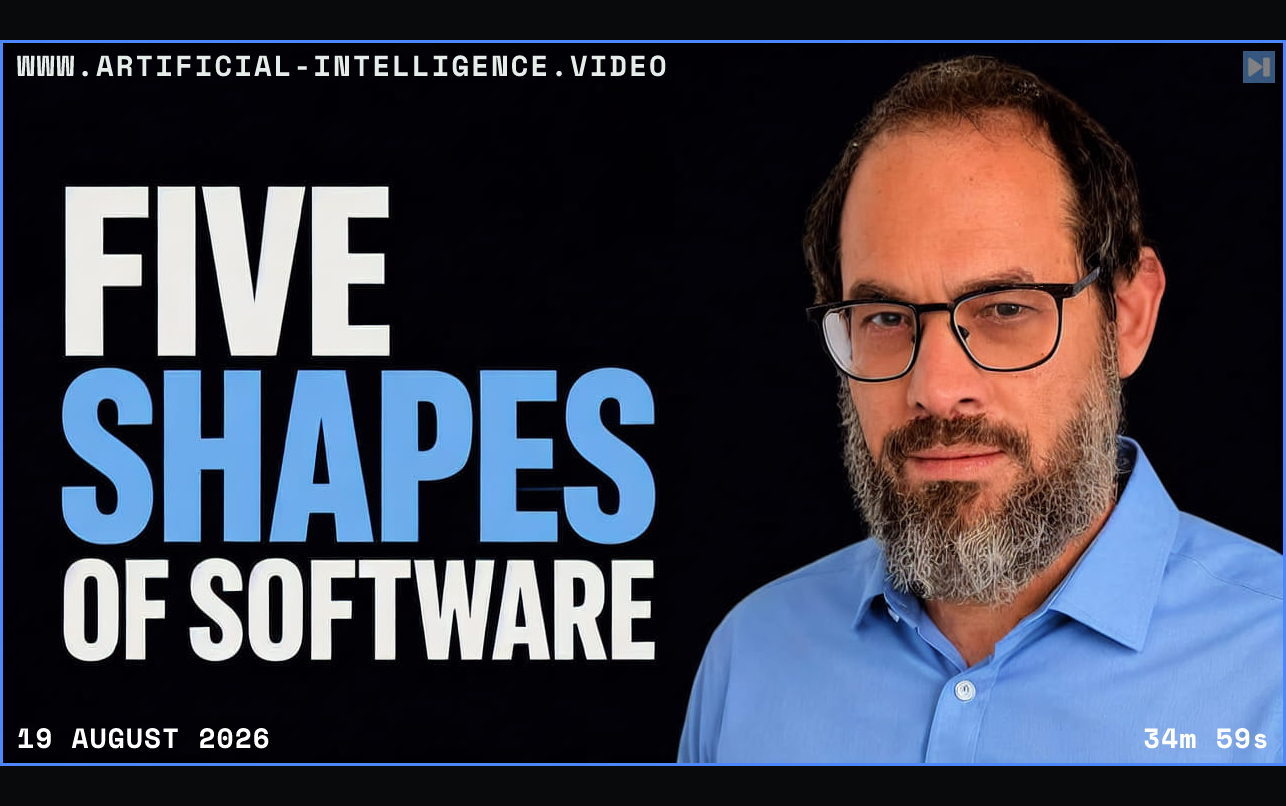
Nate B Jones distinguishes five common shapes for personal softwarePersonal software is an application built around the specific workflow, preferences, or recurring problem of one person or a small group.: a local tool, a hosted web applicationA hosted web application runs on remote infrastructure and is accessed through a web browser over a network., a native phone applicationA native mobile application is installed on a phone and built to use that mobile platform's interfaces and device capabilities., a background serviceA background service is software that runs without a continuously visible interface to perform ongoing or scheduled work. and a hardware-bound systemA hardware-bound system is software designed around a particular physical device, sensor, controller, or machine.. The right choice follows from where the work happens, what must remain private and how often the user needs access.
Nate B Jones argues that building is only the beginning. Personal software still needs clear file ownership, security boundaries, testing and a maintenance plan, especially when it handles sensitive information or runs continuously without direct supervision.
Nate B Jones presents the framework as a way to avoid defaulting every idea into a web app. Choosing the smallest suitable shape can reduce complexity while preserving control over data and long-term operation.
 Watch on YouTube