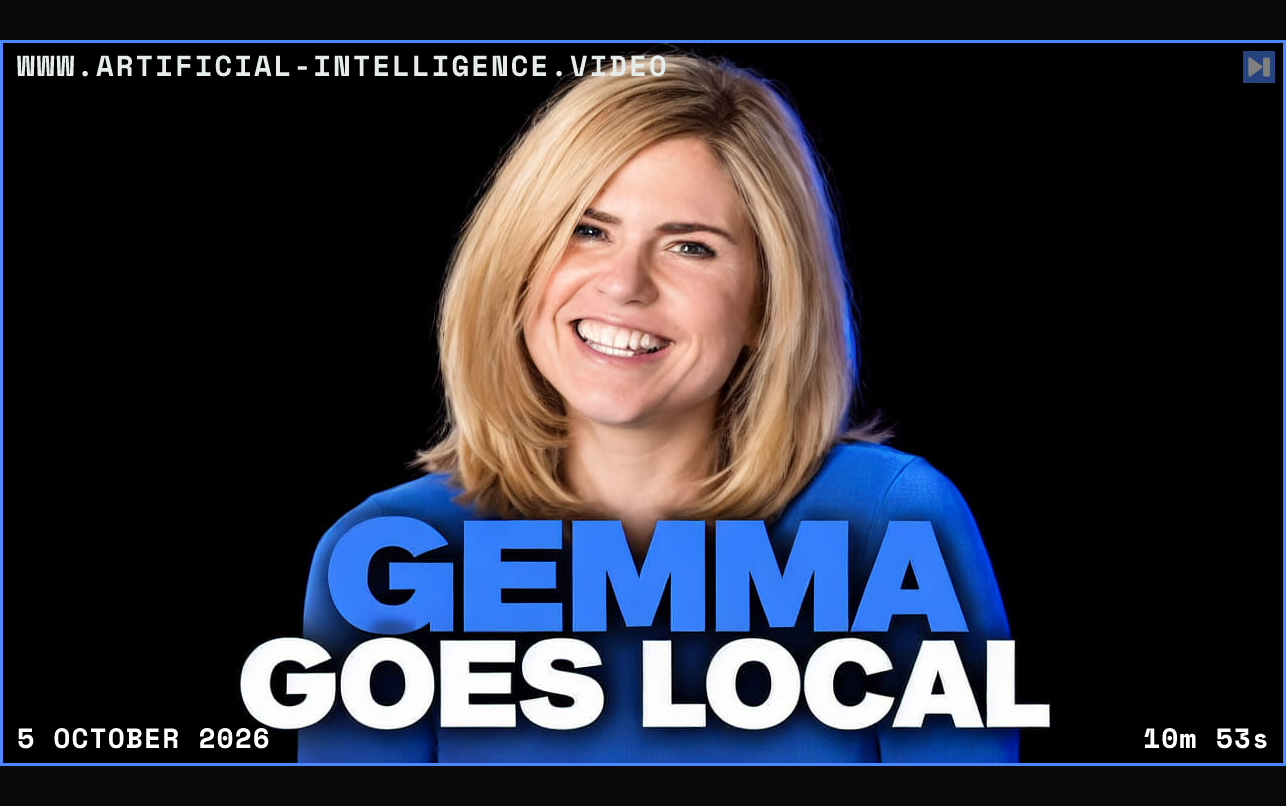
Paige Bailey introduces the Gemma model family and demonstrates ways to run small models close to the userOn-device inference runs a trained model on the user's device rather than relying entirely on a remote model service. rather than relying on a hosted service for every interaction. Browser and mobile examples cover text, images, audioA multimodal model can process or generate more than one kind of data, such as text, images and audio. and tool use, with deployment choices tied to device memory and available compute.
The session connects these examples to developer tooling, including a browser storybook built with Transformers.js and a mobile model gallery. Bailey describes model sizes, quantizationModel quantization represents AI model values with fewer bits to reduce storage, memory use and often inference cost. and local execution options, while positioning broader DeepMind scientific work as context rather than claiming that every research capability is demonstrated on a phone.
 Watch on YouTube