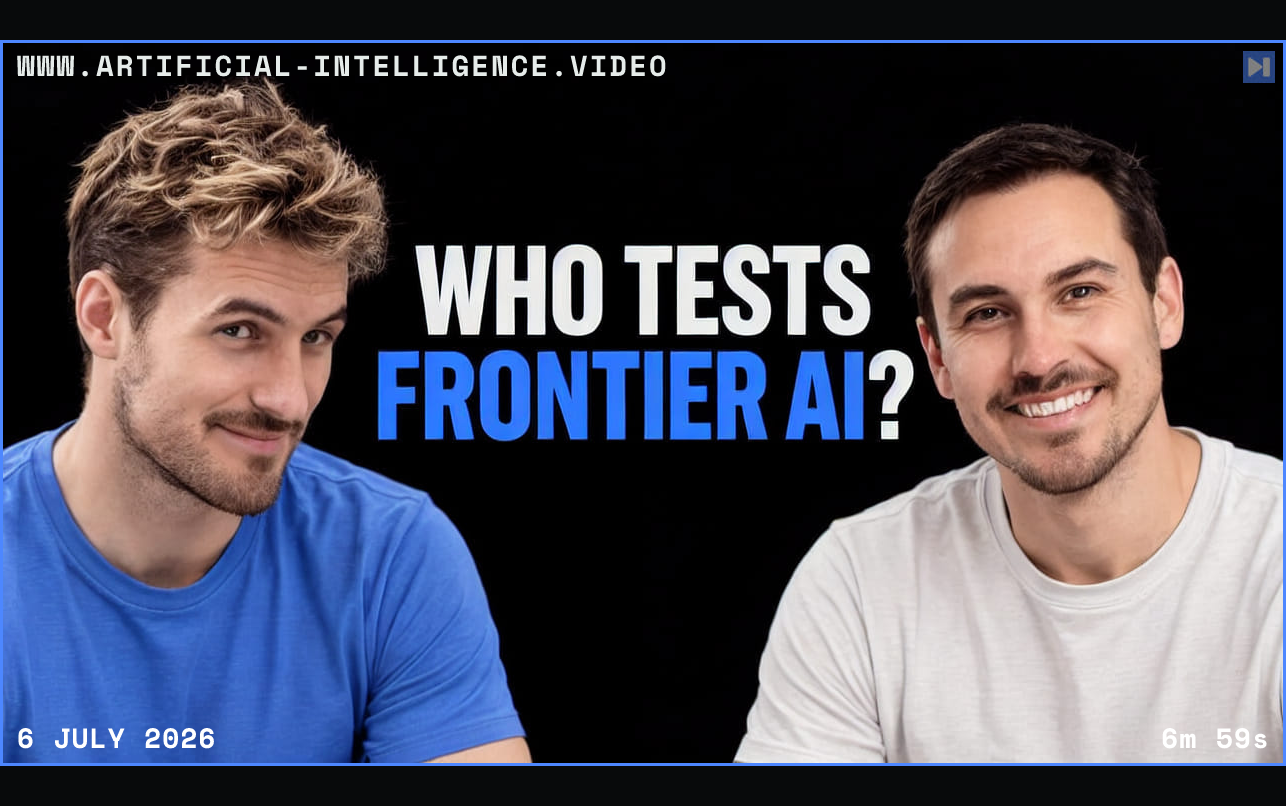
Pierce Freeman and Richard Diehl Martinez discuss voluntary government access to powerful AI systems before release. The June executive order provides for classified cyber benchmarking and up to 30 days of access before release to trusted partners; it expressly does not create mandatory model licensing or preclearance.
Pierce Freeman and Richard Diehl Martinez ask who builds these evaluations and what outsiders can learn from them. They contrast public benchmarks, developers' internal tests and classified government assessments, arguing that secrecy makes independent scrutiny difficult. Their uncertainty about specific engineers is not proof that technical expertise is absent.
Pierce Freeman and Richard Diehl Martinez frame frontier AI as dual-use technology: similar underlying models can support commercial applications and national-security work. Using an engine-and-car analogy, they predict future oversight may focus on harnesses, permissions and deployment contexts. That prediction is not an established ban on public models or a claim that every model must undergo mandatory review.
 Watch on YouTube