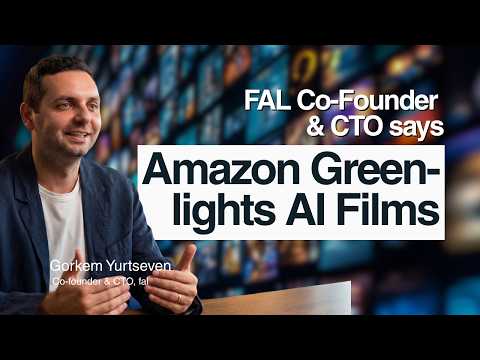
At a generative media conference in San Francisco, Gorkem Yurtseven describes “token market fit”: creators can now use substantial video-generation capacityA video generation model creates or transforms moving images from text, images, video, audio, or structured controls. throughout a workday because the output has become useful enough to justify its cost. He says controllability remains the hardest problem, making prompts, visual references and rough 3D inputsPrompt engineering is the practice of designing and refining instructions, context, examples, and constraints to obtain useful AI outputs. important to production.
Yurtseven says adoption has accelerated as studios work through legal concerns and models improve in resolution and reference-based controlReference-based video generation uses supplied images, scenes, or other visual guides to steer the video an AI system creates.. He cites publicly greenlit AI-only or AI-assisted projects and expects generation to become one part of a broader visual-effects pipeline. He also sees investment in smaller studios that pair storytelling experience with technical talent.
Yurtseven does not think AI video has had its mass-market moment because generation remains costlyInference cost is the expense of running a trained AI model to process inputs and produce outputs.. He hopes filmmakers will soon make AI-assisted work that still holds up years later, while arguing that distinctive storytelling and creative judgment remain human strengths.
 Watch on YouTube