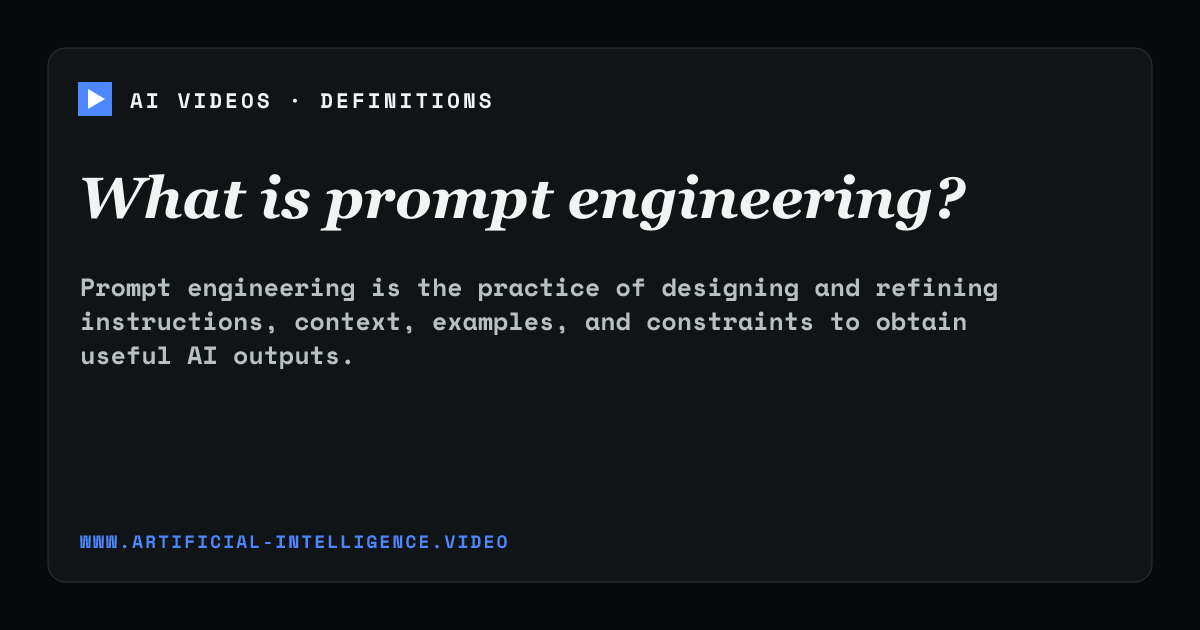
Prompt engineering makes the requested goal, inputs, constraints, output format, examples, and acceptance criteria clearer to a model. It can also structure multistep work, tool use, reference material, and checks for important requirements.
A compact prompt can be effective when it names a concrete outcome and the model can fill in reasonable details. More consequential or production-oriented work usually benefits from explicit requirements because unstated assumptions can produce inconsistent or unsafe results.
ELI5
Prompt engineering means preparing a clear request and the right supporting information for an AI system. It is less about finding magic words and more about explaining the real goal and constraints.
For example, 'make it modern' is vague. A stronger prompt can identify the users, show a reference, describe the checkout flow, specify the brand colors, and state which visual clichés to avoid.
What can a well-designed prompt include?
It can include the goal, audience, context, source material, constraints, examples, tools, output format, quality criteria, and checks for completion.
When can a compact prompt work well?
It can work well for exploratory prototypes when the desired outcome is concrete and the user accepts that the model will choose many implementation details.