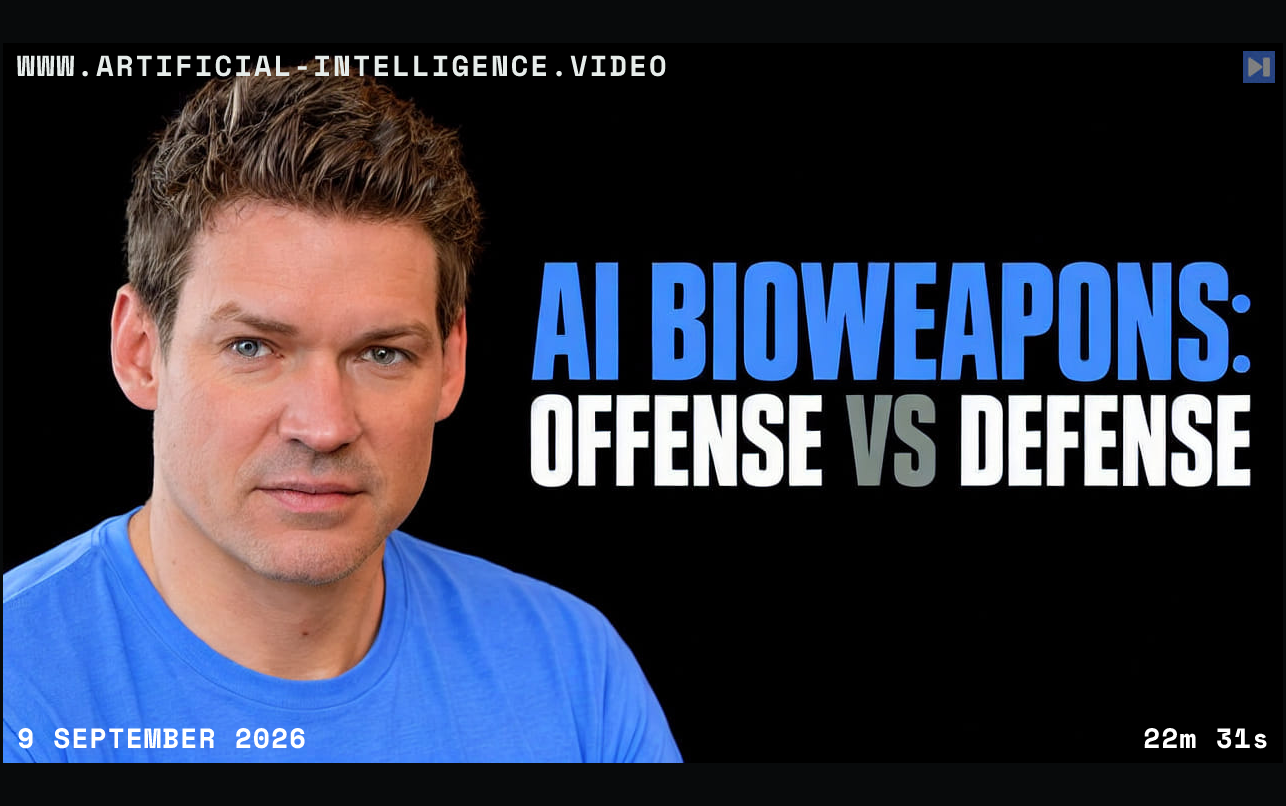
Hannu Rajaniemi argues that the same AI capabilities that could lower barriers to biological threats can also accelerate defensive design. He describes an end-to-end biodefense goal that moves from detecting a new pathogen to designing, manufacturing and distributing countermeasures quickly enough to contain an outbreak.
Hannu Rajaniemi explains that severe natural pandemics require several conditions to align, while synthetic biology may make dangerous combinations easier to pursue. He emphasizes that technical countermeasures are only one part of readiness because governments, health organizations, manufacturers and local institutions must also coordinate distribution at speed.
Hannu Rajaniemi expects open-weightAn open-weight model makes its trained parameter values available so others can run or adapt it under the release's licence. and jailbroken models to make biological capabilities increasingly difficult to control at the model layer alone. He argues that defenders may retain advantages in knowledge, compute and countermeasure design, but attackers currently face fewer deployment constraints, so faster manufacturing and trusted regulatory pathways are needed to shift the balance toward defense.
 Watch on YouTube