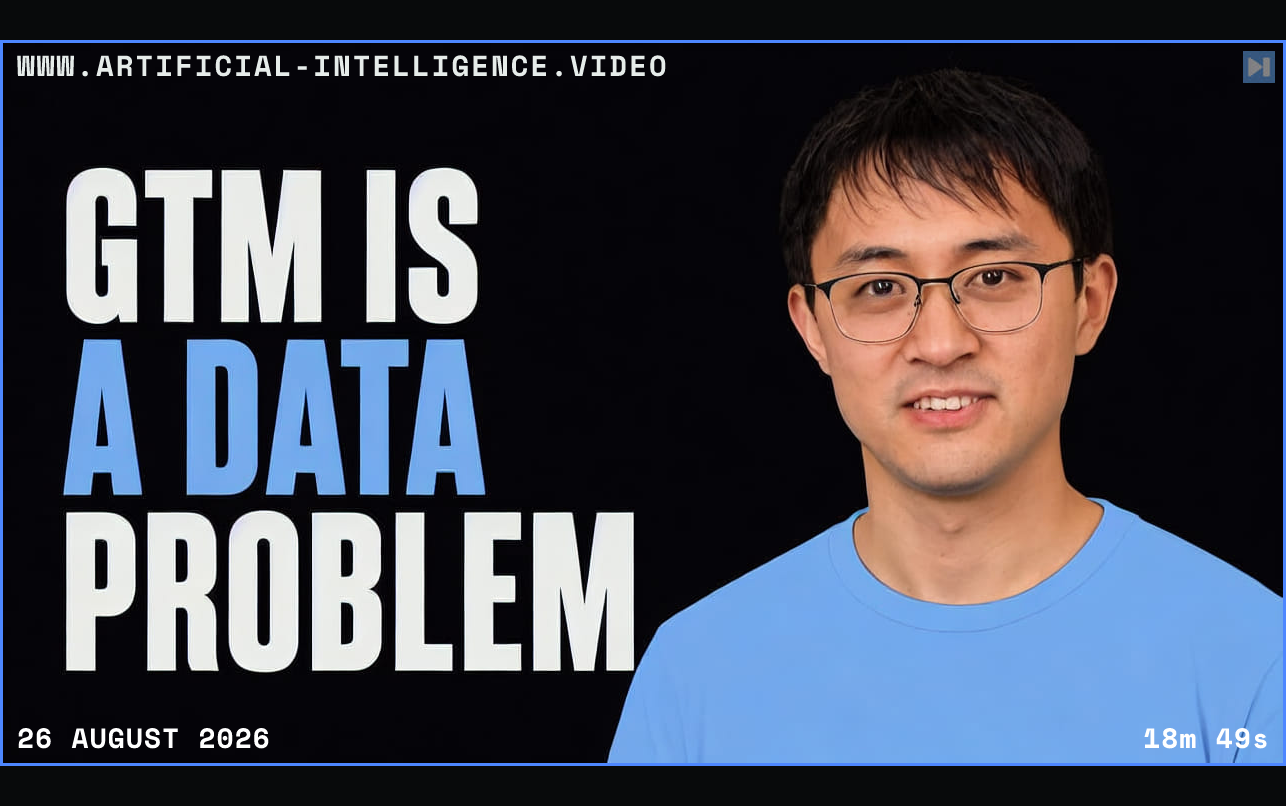
Exa co-founder Jeffrey Wang argues that technical teams can treat go-to-market as an AI engineering problemAI go-to-market automation uses models and agents to scale repeatable sales, marketing, and revenue-operations research or execution within governed business workflows.. Product quality and distribution both matter, while agents make research, qualification and customer support increasingly programmable.
Wang says the core requirement is a live modelAn AI context engine gathers, reconciles and ranks relevant information so an AI agent can act with the history, decisions and permissions surrounding a task. that combines internal product and customer data with external information about companies, people and current events. Exa exposes that context through agent interfaces, MCP-connected systems and customized tools that help teams research accounts, draft outreach and act on prior decisions.
He emphasizes permission boundariesAn agent permission boundary limits the information, tools and actions an AI agent can use during a task. and human oversightHuman-in-the-loop AI keeps a person involved in reviewing, correcting, approving, or guiding an AI system's work.. Exa's internal agents expose different tools depending on the callerA tool allowlist is an explicit set of tools that a user, agent, role, or task is permitted to invoke, with all unlisted tools denied by default., while forward-deployed engineers combine domain work with maintaining the systems that support revenue teams.
 Watch on YouTube