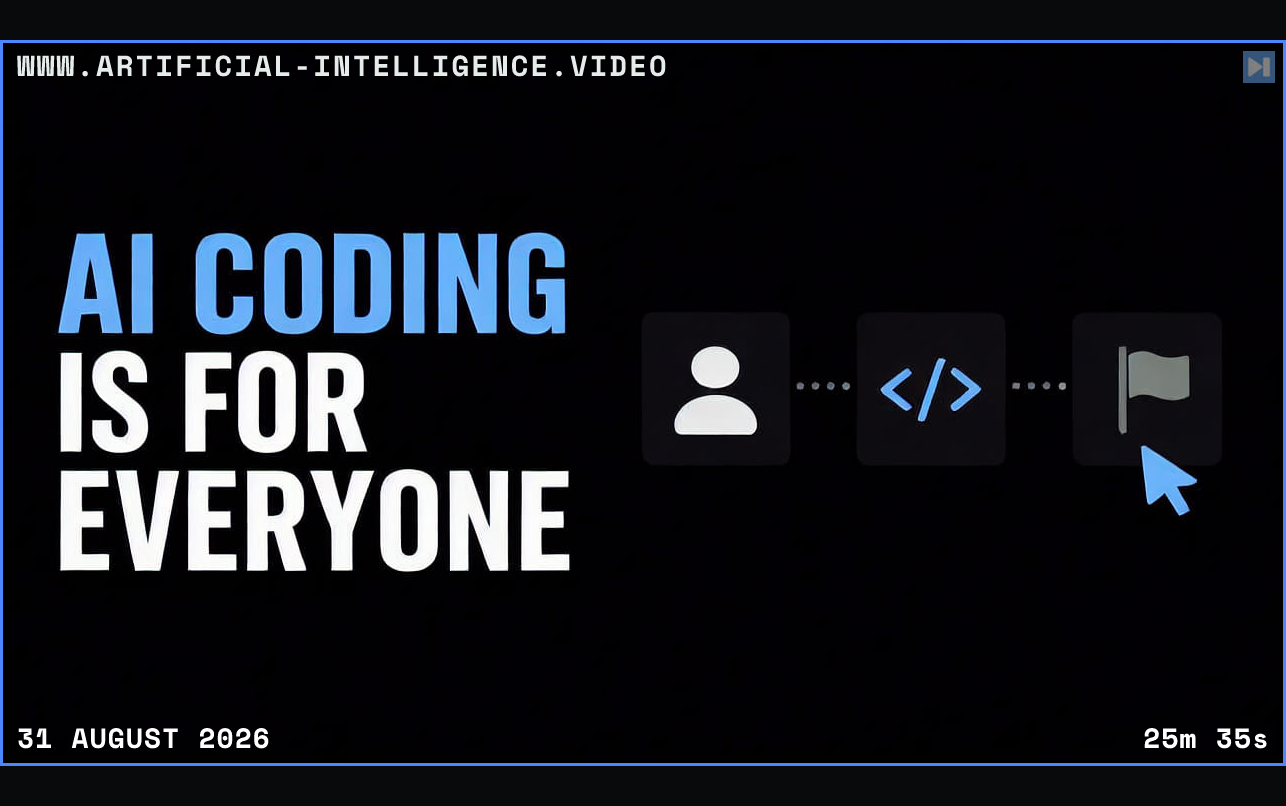
The AI Daily Brief separates useful build projects into three patterns: automation keeps the same job and output while removing manual stepsWorkflow automation uses software or AI to complete a connected sequence of routine steps with less manual effort., upgrades keep the job but improve the output, and inventions create capabilities that were not practical before. It also distinguishes disposable prototypes, personal softwarePersonal software is an application built around the specific workflow, preferences, or recurring problem of one person or a small group., production software and full market products so builders can match reliability and security to the real audience.
Practical opportunities appear across presentation, content, data, document, inbox and administrative workKnowledge-work automation uses AI and software to reduce repetitive effort in research, analysis, communication, documents, and administrative tasks.. Examples include interactive reports, document-processing pipelines, recurring data transformations, status pages, comparison tools and monitors that watch changing sources. The advice is to start from a familiar work problem and preserve a clear manual fallback where appropriate.
The episode cautions that being able to build something does not mean replacing every existing service. Mature software may still be cheaper and saferA build versus buy decision compares creating custom software with adopting an existing product for a defined need., while custom code can connect those services around a specific workflowAI-assisted software development uses AI systems to help plan, write, test, review or maintain software while people retain responsibility for the result.. The broader recommendation is to experiment with personal software until workers can recognize which of their problems have software-shaped solutions. The channel introduction and closing promotion are omitted.
 Watch on YouTube