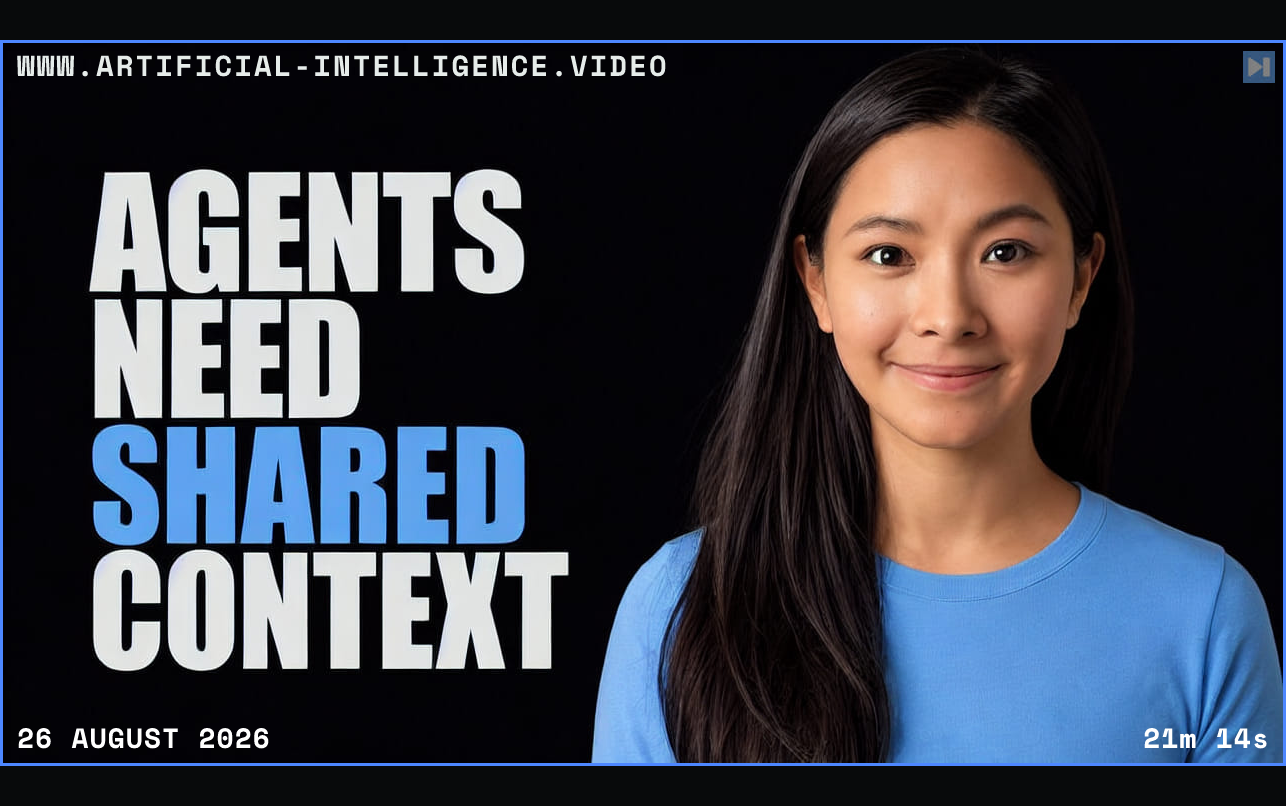
Flora Liu describes Notion's go-to-market stackAI go-to-market orchestration coordinates customer data, decisions, automated actions, human tasks, and communication channels around a commercial outcome. as a distributed systemsA distributed system is a group of networked components that coordinate to provide one service despite separate state and partial failures. problem rather than a collection of sales and marketing tools. Customer context was fragmented across product data, CRM systems, meeting notes and vendor platforms, so the team built a consolidated model that people and agents can query from the same workspace.
The architecture follows four stages: know the customer context, decide the next best step, act through an email, product message or human task, and learn from the outcome. Signals trigger durable multi-agent workflowsDurable workflow execution records an AI workflow's progress so it can recover and continue after interruptions instead of starting again. for research, drafting, scoring and review, while tracing and feedback loops help the system improve without allowing one failed network call or malformed transcript to break the batch.
Notion keeps humans in the loop for customer-facing sales work, centralizes eligibility rules and treats external form submissions as untrusted input. Liu argues that teams should own the context layerContext engineering designs the information, instructions, memory, and tool state an AI receives so it can perform a task reliably. that encodes their advantage, rent general infrastructure such as orchestration and email, shadow their best people before automating, and design agents as operators on the same substrate as humans.
 Watch on YouTube