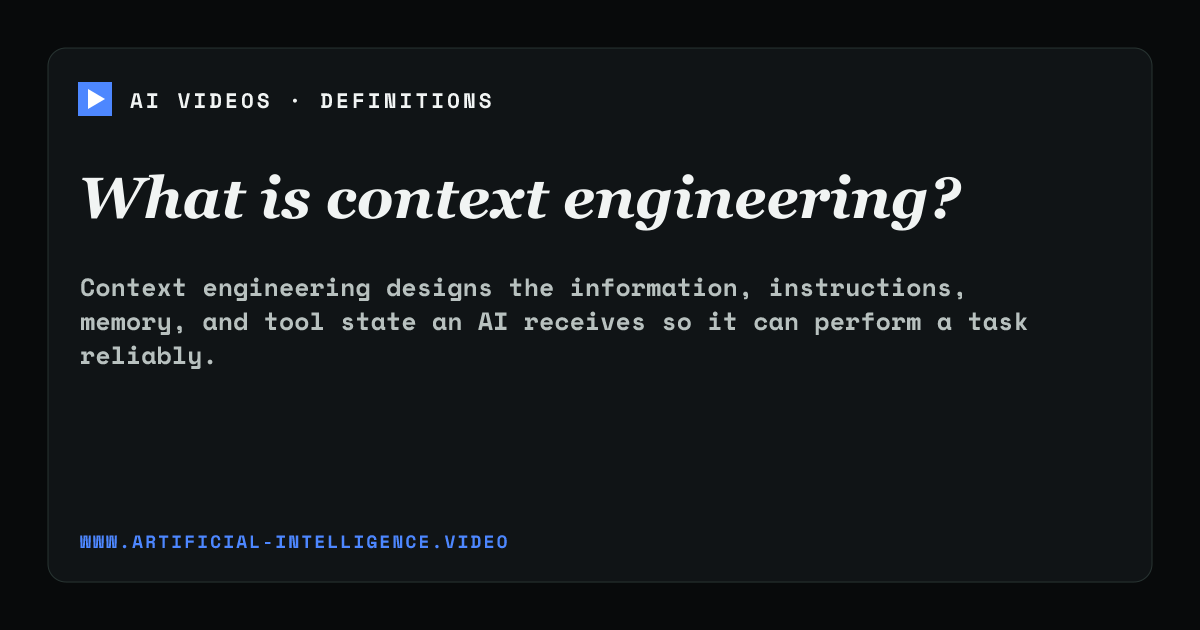
Context engineering selects and structures what a model sees during work. In a multi-agent system, each specialist can receive only the goals, constraints, history, files, and tool state relevant to its role.
Focused context can reduce overload and improve consistency. Designers must keep information current, traceable, and permission-bounded so specialization does not hide missing dependencies or spread stale state.
ELI5
Context engineering prepares the information an AI system needs before it answers or acts. This can include instructions, relevant documents, available tools, earlier decisions, permissions, and the current state of the work.
For example, an agent asked to update a company policy needs the current policy, the approved writing rules, and the audience. Giving it an entire unrelated document archive may add noise rather than improve the result.
How does context engineering help specialized agents?
It gives each agent focused information and tools for its role, reducing distraction, cost, and unnecessary data access.
Can focused context omit something important?
Yes. Handoffs and integration checks must ensure agents receive necessary dependencies and the combined result satisfies the overall task.