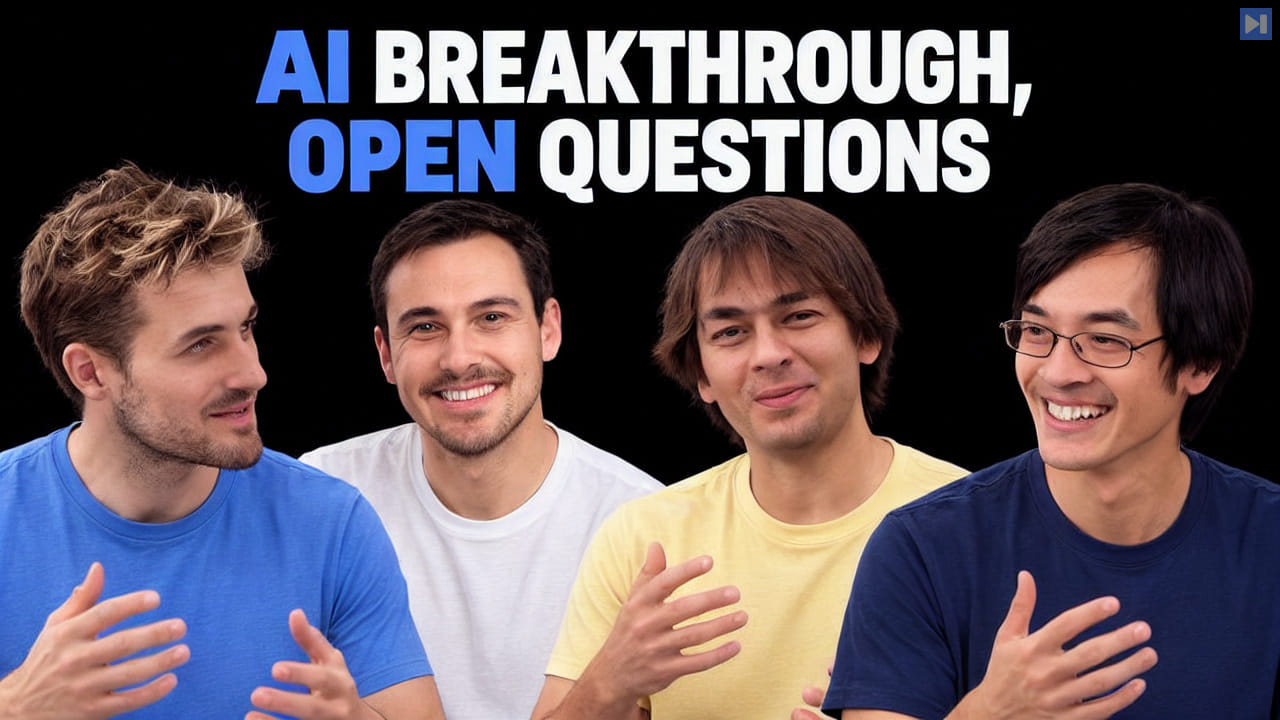
Sophia Dew explores whether open models can prevent AI capabilities from concentrating in a few organizations. Lukasz Kaiser argues that today's expensive transformer training does not establish a permanent limit on who can build useful AI. More data-efficient methods and specialized systems could create opportunities for smaller teams and university researchers.
Matt White contrasts incentives for open-model development in China and the United States. He argues that stronger competition, access to compute, investment and open research would help smaller American labs participate. Publishing research and training artifacts also gives students the material they need to understand and improve modern systems.
Victor Su-Ortiz describes how downloadable model weights let creators adapt video-generation systems to their own hardware and workflows. Dmytro Dzhulgakov extends the ownership argument to businesses: models customized using an organization's own data can preserve distinctive capabilities and reduce dependence on a provider's changing service.
Dmytro Dzhulgakov emphasizes that customization requires useful datasets and evaluations, not just access to weights. Teams need to define what successful behavior means for their product before training or adjusting a model. Smaller specialized models can then offer practical improvements in quality, latency and cost for a particular task.
Jean Kossaifi places these proposals in the history of open research and software. Shared methods and tools allow industry and academia to build on one another's work, including in weather forecasting and scientific computing. The interviews identify compute access, privacy, training expertise and a sustainable competitive ecosystem as continuing challenges.
 Watch on YouTube