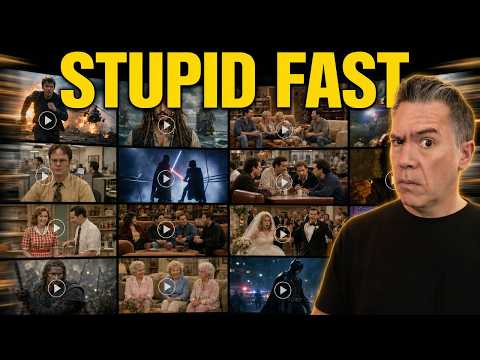
Tim Simmons examines H3 Max, a service built on MiniMax H3 that can render a five-second 768p clip with audio in under three seconds. He says the speed comes with a familiar quality tradeoffA quality-latency tradeoff occurs when an AI system gains faster responses by accepting reduced output quality, or gains quality by taking longer.: a local H3 Turbo LoRA can look better in direct comparisons, but H3 Max is fast enough to support experiences that ordinary batch generation cannot.
fal Live adds an autoregressive director layer that can retain up to two minutes of context while users steer a continuous stream through chat promptsLive prompting sends instructions to an AI system while an experience is running so later output can react to current input.. The current examples include several public channels, an endless short-video feed and surreal programs that try to connect otherwise unrelated audience suggestions.
Simmons highlights more purposeful experiments, including a real-time video Pictionary gameReal-time video generation creates AI video quickly enough for new footage to be produced as an experience is being watched or directed., a branching animated adventure and a news channel that converts RSS, Reddit and radio-antenna inputs into generated segments. He argues that audience voting could support new interactive entertainment formats even if serious narrative work still needs intentional direction and post-production.
The economics remain difficult for continuous use. Simmons reports an API price of eight cents per secondInference cost is the expense of running a trained AI model to process inputs and produce outputs. at roughly 720p, or about $4.80 per generated minute, with a temporary introductory discount. Running an uninterrupted channel at the regular rate could therefore cost close to $4,000 per day.
H3 Max may eventually be open sourced, but Simmons has not seen an official commitment and expects the continuous director layer could remain proprietary to fal. He also flags unresolved intellectual-property issues in demos that imitate familiar television characters, while concluding that interactive generation is the more important long-term opportunity.
 Watch on YouTube