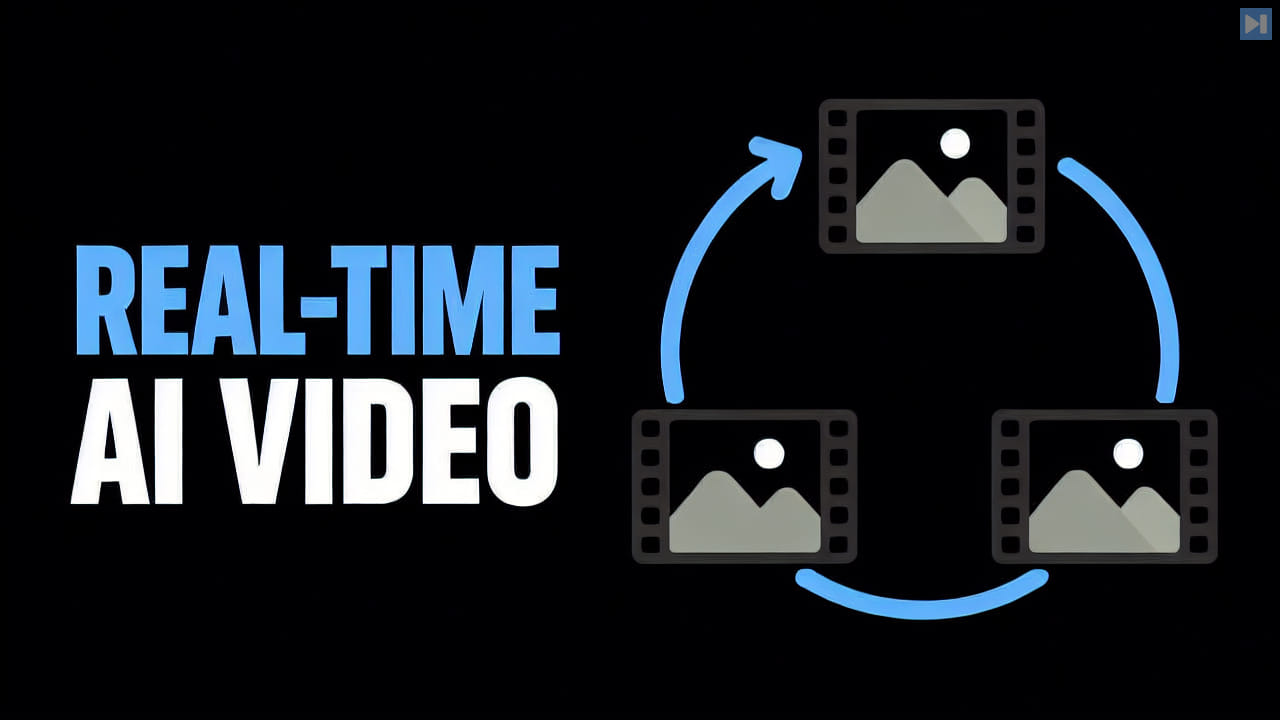
Real-time video generation is a workflow whose sustained production rate keeps pace with presentation or interaction. A system must render each segment before viewers exhaust the playable material already available, while leaving enough margin for delivery and brief slowdowns.
The threshold depends on clip duration and the intended experience rather than one universal latency number. Output quality, audio, moderation, continuity, and recovery also matter because a fast stream can still fail if its generated segments are incoherent or unsafe.
ELI5
Real-time video generation creates AI video fast enough to keep an experience playing or responding while people watch it. The system prepares new footage before the available queue runs out.
For example, a generated story can play one short scene while the next scene renders from a viewer's choice. Speed alone is not enough because continuity, audio, moderation, quality, and recovery also need to work.
When does video generation count as real time?
It counts as real time when generation and delivery reliably keep up with the intended playback or interaction rate without repeated pauses.
Can real-time AI video support games?
Yes. A fast enough model can generate visual responses during play, although latency and consistency constrain the game design.