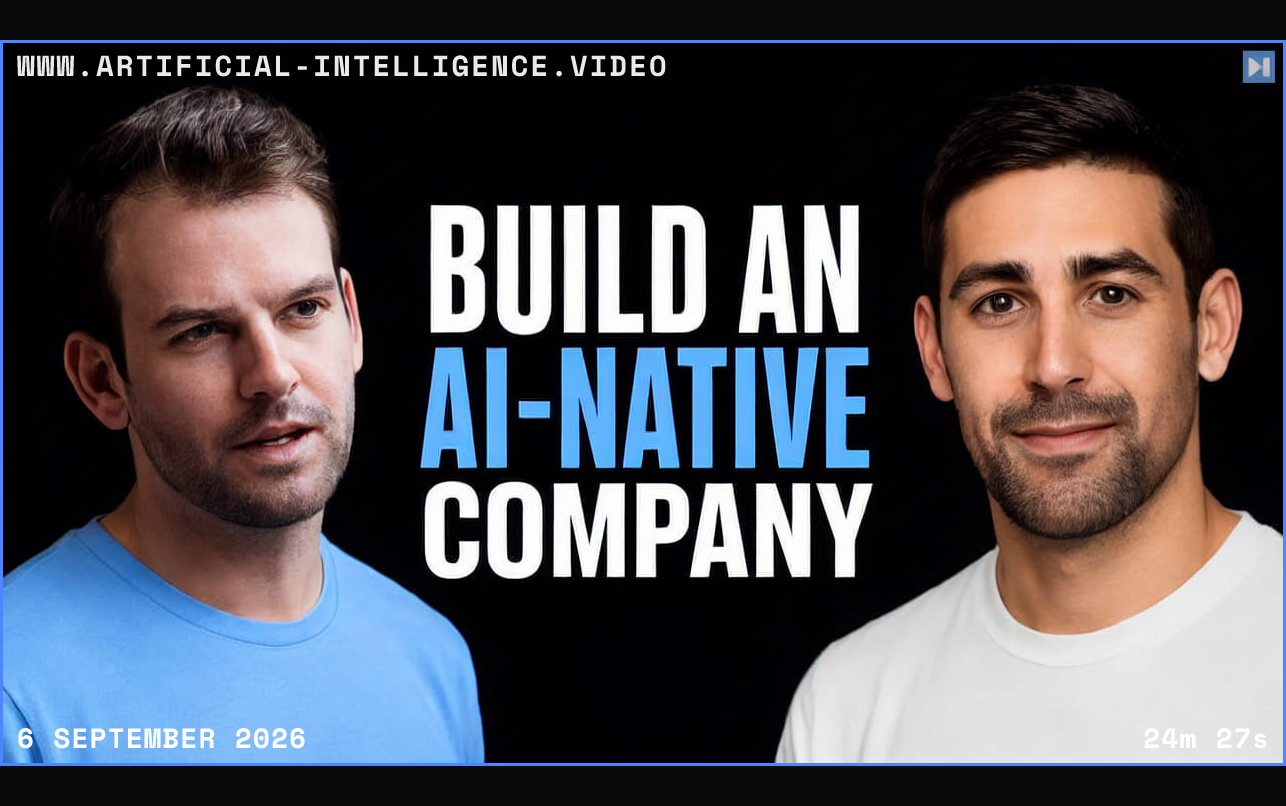
Nathaniel Whittemore examines Alex Lieberman's practical description of an AI-native companyAn AI-native company designs its work, systems and responsibilities around AI capabilities from the beginning.. The starting point is process mappingProcess mapping describes a workflow's desired outcome, constraints, inputs and responsibilities so it can be understood and improved. that captures the desired outcome and constraints without forcing agents to copy every step of a human workflow.
The framework treats context as infrastructure. Teams give agents access to current company knowledge, route tasks to suitable modelsAI model routing sends each request to a model chosen for that request's complexity, cost, speed, privacy, or other requirements., package reusable skills and separate planning from execution. Engineering measures accepted output rather than raw generationAn AI evaluation metric is a defined measurement used to quantify a particular aspect of an AI system's performance., while finance, marketing and operations build their own agent-supported workflows.
Whittemore argues that governance should enable useful automation instead of simply slowing it down. Clear guardrails, traceability, evaluation and earned autonomyAgent autonomy is the degree to which an AI agent can choose and execute actions without immediate human direction. let agents take on more work while people remain accountable for judgment, quality and business outcomes. Generic show promotion and the closing subscription request are omitted.
 Watch on YouTube