Whittemore argues that persistent personal agentsA personal AI agent uses a person's authorized goals, preferences, routines, context, and tools to provide continuing individualized assistance. may create meaningful switching costs because they accumulate context, account connections and preferencesVendor lock-in occurs when switching away from a provider becomes difficult or costly because systems depend on its proprietary interfaces, data, features, contracts, or operations.. He recommends bounded experimentation without granting access to every accountAn agent permission boundary defines and enforces which resources and actions an automated agent is allowed to use..
His comparison focuses on four decisions: work versus personal use, control over the underlying model, convenience versus model capability, and where data and memoryAI agent memory is stored information that an agent can retrieve and use across steps, sessions, or changing contexts. are stored. Existing software ecosystems, geographic availability and price can also determine which options are practical.
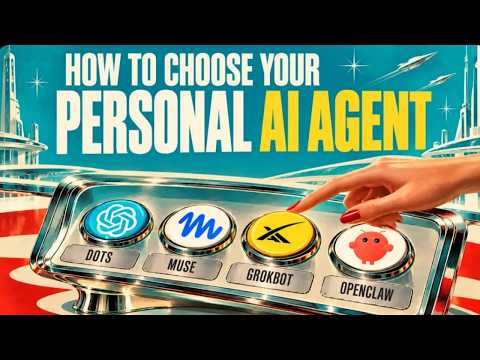
The episode opens with an extended discussion of Ethan Mollick's views on self-organizing agents and closes with a subjective recommendation quiz. The quiz illustrates competing preferences rather than providing an independent benchmark; the rapidly changing product comparisons reflect the speaker's assessment at recording time.
 Watch on YouTube