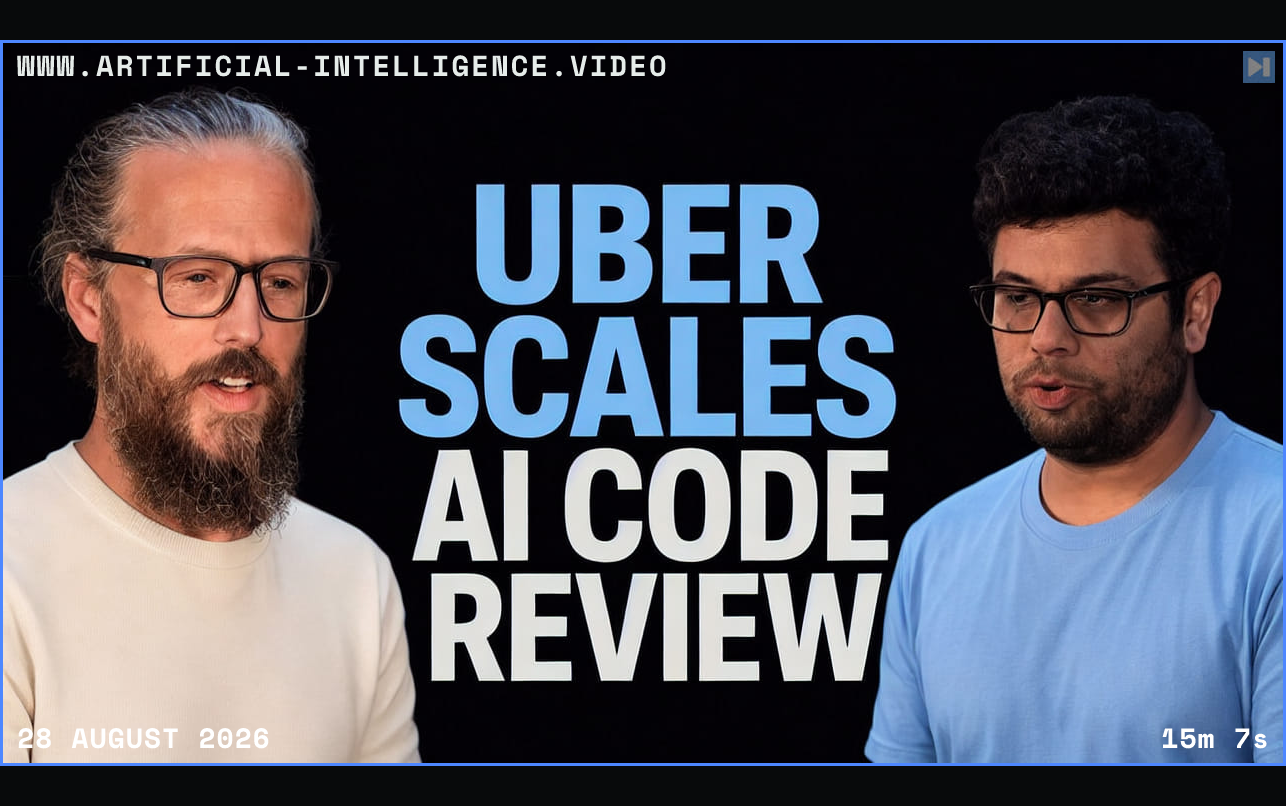
Will Bond and Ameya Ketkar describe how Uber built uReview after code review became a growing bottleneckAI-assisted code review uses AI to inspect software changes for defects, risks, standards, missing tests, and opportunities for improvement while human reviewers retain responsibility.. The company's first-review latency rose from roughly three hours in 2024 to nine hours in 2026 as AI-assisted development increased both change volume and pull request size across thousands of engineers and multiple language monorepos.
uReview provides one review layer for GitHub, Phabricator and agent-driven development loops. A central service dispatches work to several generatorsMulti-agent code review uses an agent separate from the implementer to inspect a software change, identify issues and request revisions. tuned for different cost and performance tradeoffs, then post-processes the responses by rating, categorizing, filtering and deduplicating comments before they reach an engineer.
Uber moved beyond simple satisfaction scores to evaluate address rate, sentiment and full agent trajectoriesAI trajectory evaluation assesses the sequence of reasoning-relevant states, tool calls, decisions, and side effects that led to an agent's final result.. The platform now produces about 25,000 comments per week, with an overall address rate near 67 percent and roughly three quarters of high-severity findings addressed. Bond says iterative model, harness and evaluation changes cut cost by about 60 percent while improving quality and accuracy by around 70 percent compared with a naive implementation.
The system also supports team-owned review logic. Teams can add single-file and multi-file checks, AI lintersAn AI linter is an automated reviewer that uses a model to identify code issues that are difficult to express as fixed syntactic rules., custom agents and reusable skills connected to the existing ownership graph. The speakers expect human reviewers to move toward architecture, product context and domain expertise, while automated inner-loop review must become more accurate to avoid agents repeatedly fixing and reverting low-quality comments.
 Watch on YouTube