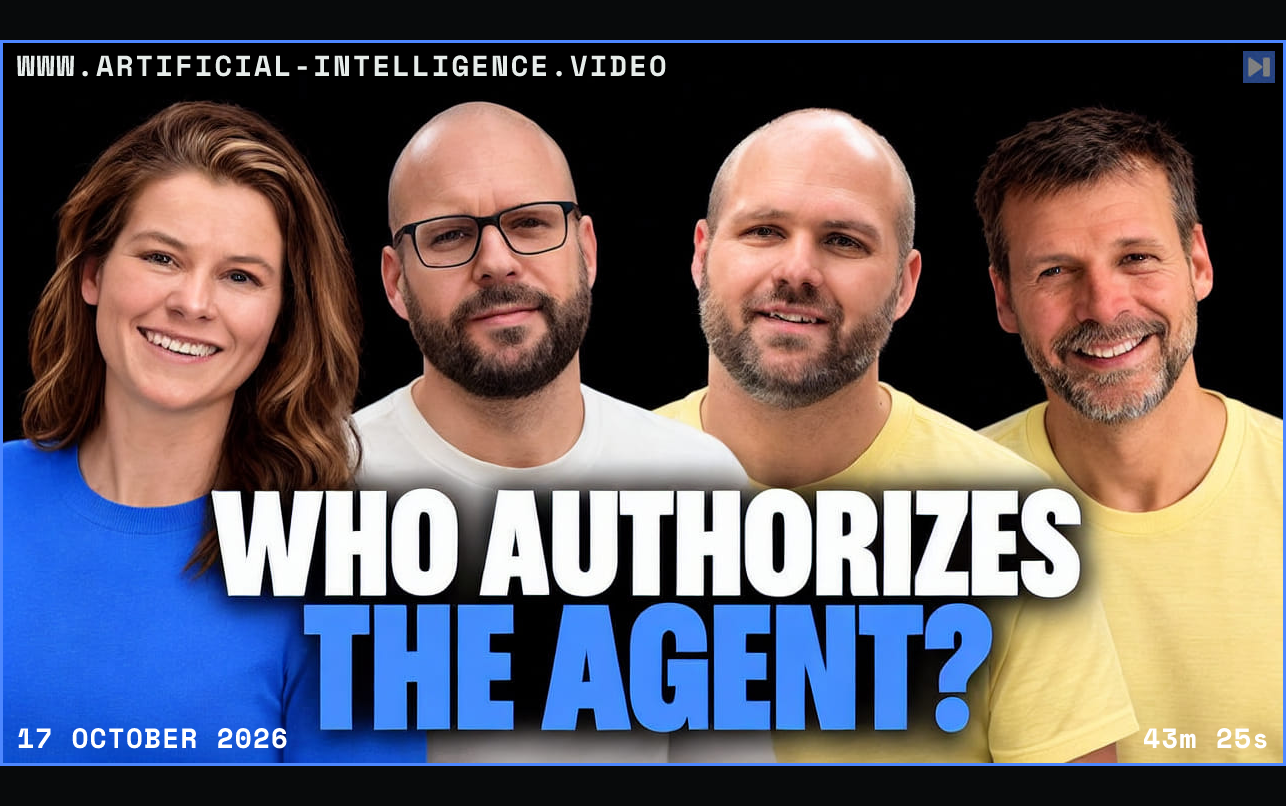
Allie Howe asks Ian Livingstone, Michael Davis and Dick Hardt why more capable models have not translated directly into safe enterprise autonomy. The panel argues that broad scopes and standing credentials leave too much ambiguity about what an agent may do in a particular task. Intent-based authorizationIntent-based authorization evaluates a proposed action against the purpose and boundaries of a specific task, rather than relying only on a user's identity or broad standing access. adds mission context to individual runtime decisions rather than treating authentication as sufficient.
Dick Hardt describes a mission that originates with the responsible person or organization and can be negotiated into clearer boundariesAn agent permission boundary limits the information, tools and actions an AI agent can use during a task.. Ian Livingstone distinguishes organization-wide policy from the user's immediate goal, while Michael Davis emphasizes changing environmental context and progressive access. The proposals remain developing approaches, not a claim that every enterprise already implements them.
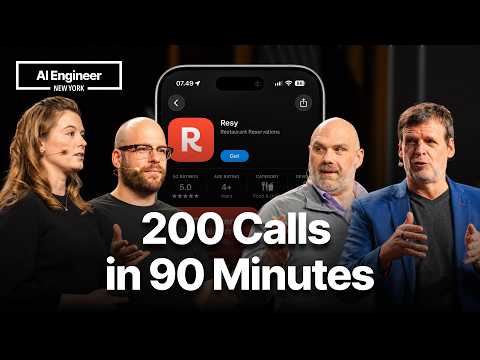
A reported restaurant-booking incident illustrates why good intentions do not prevent resource abuse. Dick Hardt contrasts a feedback-aware resource budget with a simple cutoff, and the panel discusses separating model reasoning, execution tools and an external enforcement point. Michael Davis also considers removing risky tool combinations as a task changes.
The closing discussion connects cross-domain interoperability, agentic commerce and software factories with audit recordsAI agent observability makes an agent's state, actions, tool use, failures, resource use, and outcomes visible enough to understand and operate it. outside an agent's control. The panelists offer differing views on catastrophic risk and malicious use; these opinions are not measured probabilities or guarantees that authorization alone eliminates risk. The useful common theme is accountable, bounded action with enough external evidence to investigate failures.
 Watch on YouTube