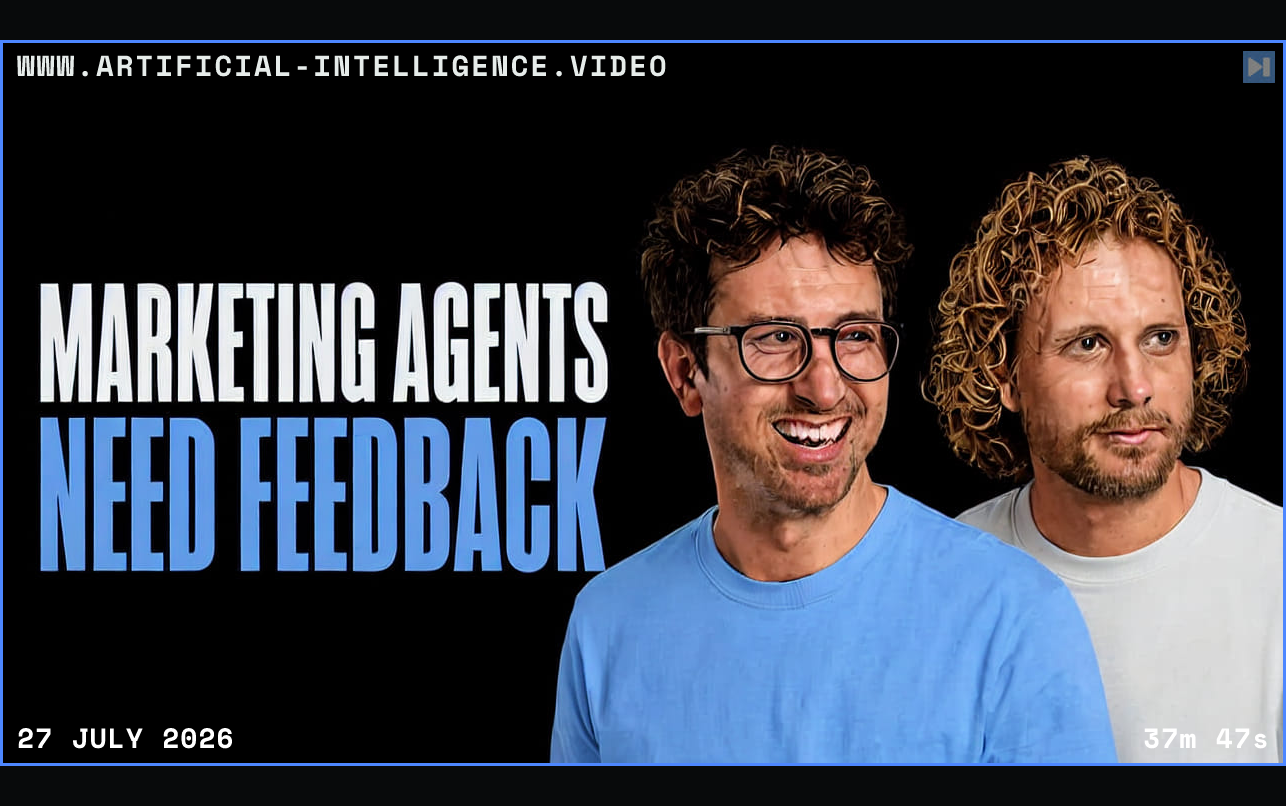
Greg Isenberg and Cody Schneider describe marketing agents as coordinated systems that can research audiences, draft creative work, publish campaigns and inspect performance. The useful shift is not simply faster content production. It is connecting each task to shared business context so the system can choose actions that serve a measurable goal.
Cody Schneider proposes a common data layer that combines product, customer, advertising and sales information. Agents can use that context to identify patterns, create campaign variants and route work through defined steps, while narrow permissions and clear acceptance criteria keep the workflow from becoming an uncontrolled chain of guesses.
Cody Schneider emphasizes that performance feedback is what turns a workflow into a learning system. Results from advertisements, landing pages and sales conversations should flow back into the next round of decisions. Without that loop, an agent may produce large volumes of material while repeatedly making the same weak choices.
Greg Isenberg and Cody Schneider also warn that automated systems drift toward repetitive output when they consume only their own prior work. Teams need to keep introducing fresh customer evidence, new creative references and human judgment. The human role becomes setting direction, reviewing exceptions and improving the system rather than manually carrying out every marketing step.
 Watch on YouTube