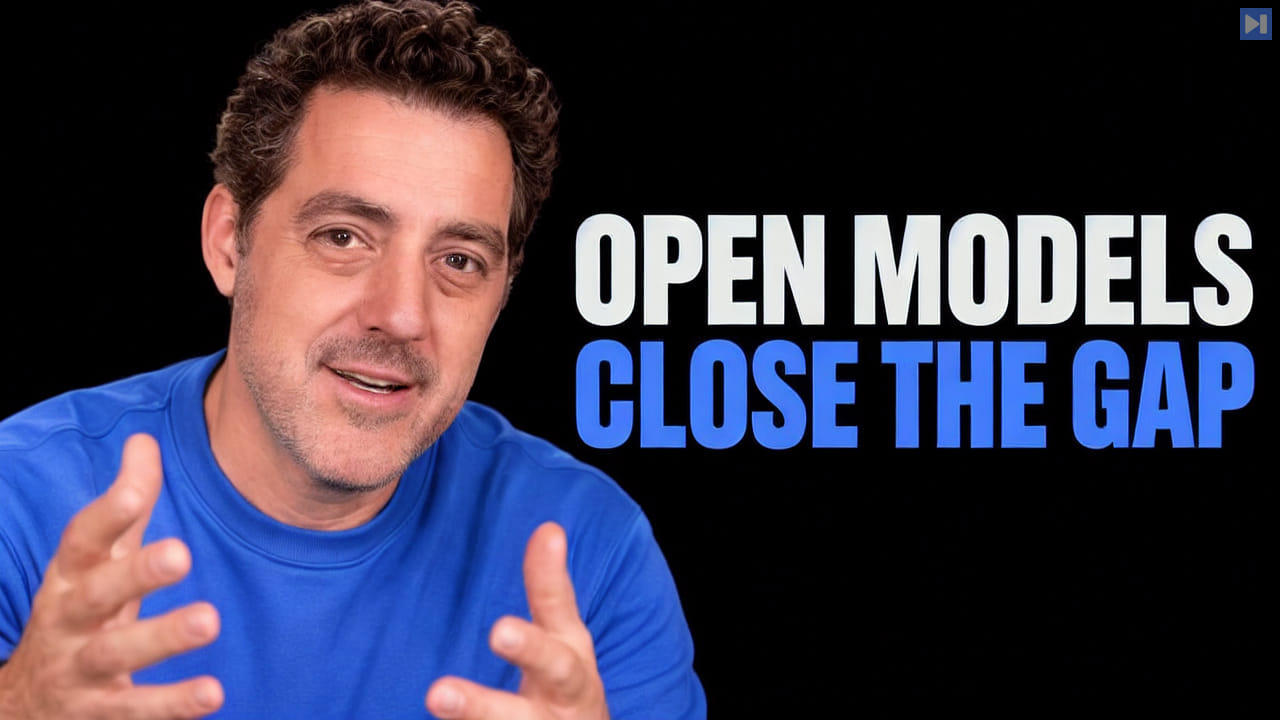
Matthew Berman introduces a new Qwen model as a strong open-weight releaseAn open-weight model makes its trained parameter values available so others can run or adapt it under the release's licence. and walks through the benchmark results highlighted by its maker. He warns that benchmark performanceA benchmark is a defined test or collection of tasks used to compare a system's performance under specified conditions. can be gamed or fail to generalize, and presents paper reproduction and chip-design demonstrations as claims from the model team rather than independently tested outcomes.
Berman contrasts advertised token pricesToken pricing is the rate an AI provider charges for processing input tokens, generating output tokens, or reading cached tokens. with cost per completed taskCost per completed task measures the total AI, tool, infrastructure, retry, and repair expense for each verified useful outcome.. A cheaper token may not save money if a model needs more tokens, retries or time to finish the same work. His discussion of model size and compute rests partly on unverified estimates, so the episode is most useful as a framework for evaluating alternatives rather than a settled ranking of frontier systems.
He welcomes downloadable models for local experimentation, self-hosting, fine-tuning and reduced dependence on a few closed providers. He also worries that model and chip co-design could eventually make organizations dependent on particular foreign hardware and servicesVendor lock-in occurs when switching away from a provider becomes difficult or costly because systems depend on its proprietary interfaces, data, features, contracts, or operations.. He ends without a firm prediction about whether open weights will keep competitive pressure on frontier labs if automated AI research accelerates.
 Watch on YouTube