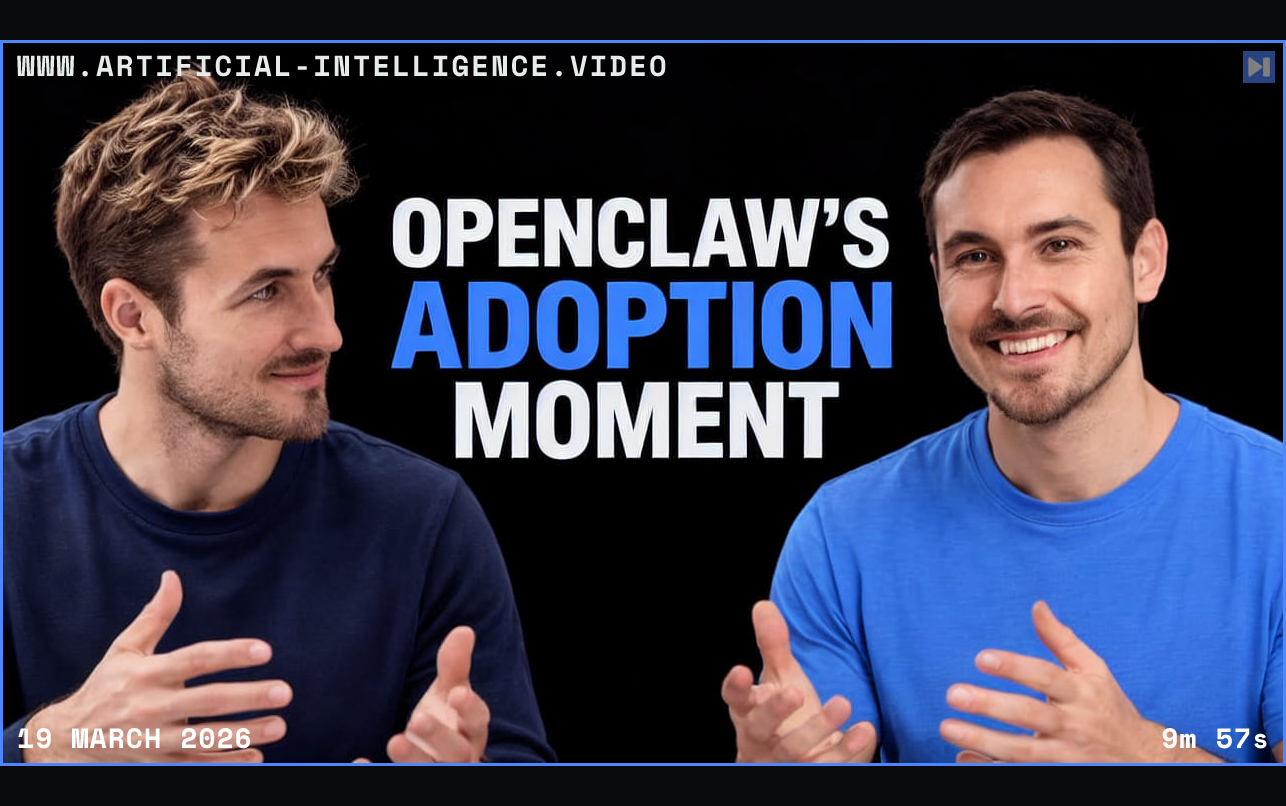
Pierce Freeman and Richard Diehl Martinez discuss reports of OpenClaw installation gatherings in China and anecdotes from friends and a language tutor. They suggest that enthusiasm for new technology may help explain interest in self-hosted agents, while their comparisons with the United States and Europe remain personal interpretations rather than measured national rankings.
The conversation links software agents to robotics and asks whether assistants could coordinate physical devices as well as messaging and computer tasks. The hosts also distinguish practical productivity from the appeal of earning money while asleep, expressing skepticism about expectations that autonomous trading agents will reliably generate profit.
Their broader thesis is that complete applications could become reusable units of work. An agent might create missing software and orchestrate multiple applications to solve a task, rather than requiring a person to assemble every small component. This is a proposed direction, not a demonstration of universal autonomous capability.
A frustrating attempt to automate household lighting illustrates the gap between powerful coding tools and fragmented everyday systems. The episode closes with the hope that agents could bridge those interfaces, without establishing that current tools can safely or reliably manage any smart-home device.
 Watch on YouTube