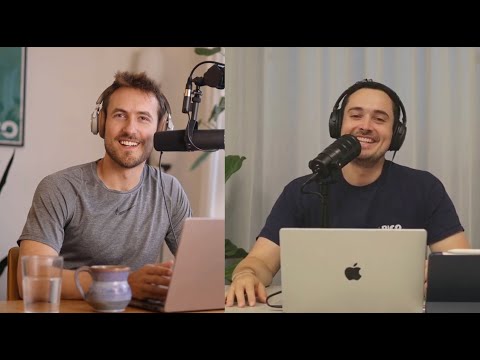
Pierce Freeman and Richard Diehl Martinez discuss their early experiences with Sora 2. Its personalized video-and-audio likeness feature makes generated clipsA video generation model creates or transforms moving images from text, images, video, audio, or structured controls. feel social rather than merely cinematic, while raising questions about consent and safeguards.
They speculate about video-model architecture, resolution, physical consistency and interactive worlds. Their forecasts of generated games and movies are predictions, not demonstrations that these systems reliably simulate physics or sustain arbitrary interactive stories.
The discussion distinguishes classifier accuracyEvaluation is the systematic assessment of a system's behaviour or results against explicit criteria. from false-negative rates, then compares deterministic filters, general-purpose model checks and specialized safety classifiers. No single approach guarantees that all harmful content is blocked.
Turning to Claude Sonnet 4.5, the hosts describe better planning, less excessive agreement and stronger coding performance in their own work. Evaluation recognition and apparent context awareness invite discussion, but do not establish human-like self-awareness or universal task reliability.
They finish with the then-rumoured OpenAI workflow builderWorkflow automation uses software or AI to complete a connected sequence of routine steps with less manual effort. and a broader question: should users construct visual canvases, generate codeCode generation uses AI or another automated system to create source code from instructions, examples, schemas, or higher-level specifications., or use diagrams to explain existing code? The episode records an October 2025 discussion before the hosts verified that announcement, not current product-availability guidance.
 Watch on YouTube