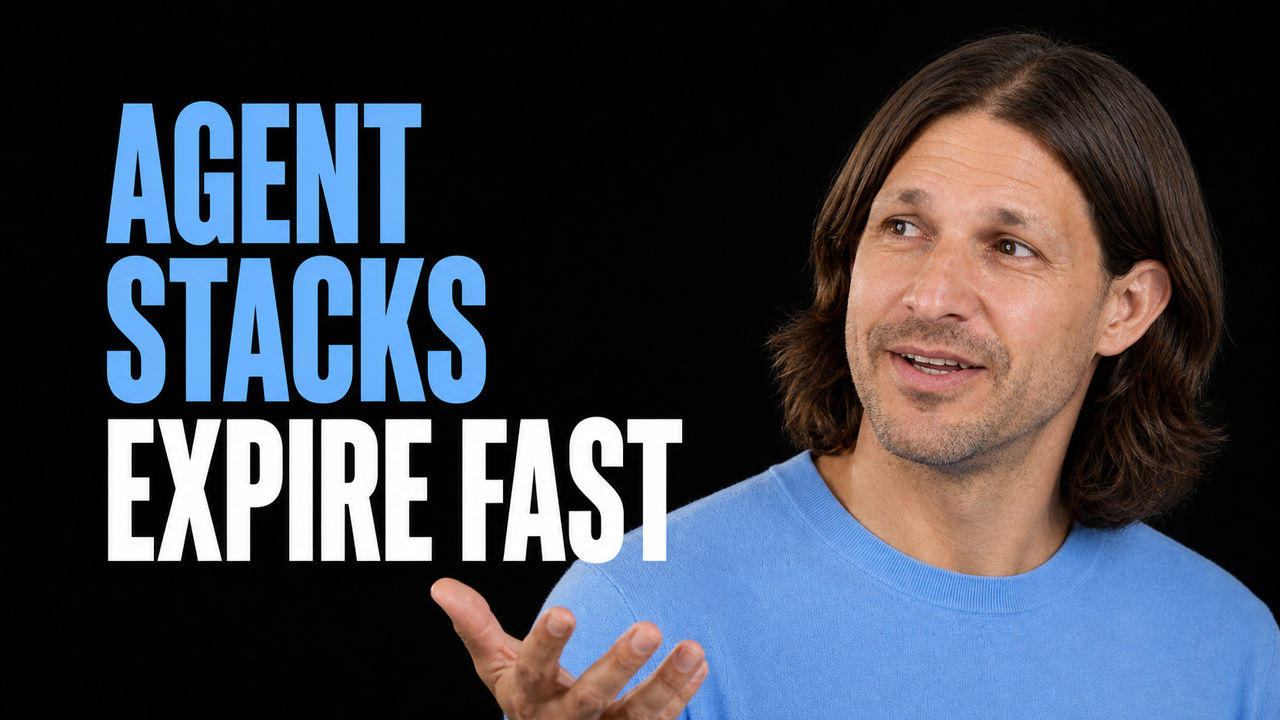
Ben Kus explains that established infrastructure advice favors deep expertise, long-lived platforms and rare migrations, but AI agent systemsAgent infrastructure is the shared technical foundation that lets AI agents run, use tools, manage state, coordinate and be evaluated safely. now change too quickly for that model. Approaches based on graphs, planners, recursive agents, skills, sandboxes, model routingAI model routing sends each request to a model chosen for that request's complexity, cost, speed, privacy, or other requirements. and agentic search have each become preferred within a short period, even when the previous design still worked.
Ben Kus recommends treating change as an expected operating condition rather than evidence that an engineering team failed. Teams should be prepared for repeated rebuilds, and leaders should explain why a sound implementation may still need replacement when a more capable approach appears. Box reviews important AI choices every six months instead of using the multi-year cadence applied to conventional infrastructure.
Ben Kus says change should still be disciplined. Reusable abstractionsAn abstraction layer provides one simplified interface over several different underlying systems so callers do not need to handle every implementation separately. make models and agent runtimesAn AI agent runtime is the execution system that manages an agent's model calls, tools, state, permissions, and task lifecycle. easier to swap, while stable eval setsAn evaluation set is a collection of examples kept for measuring an AI system rather than training it. reveal whether a new approach improves the cost, speed, quality or capability that customers actually value. Organizations that cannot track the field themselves should choose vendors and platforms partly by how well they have adapted through earlier shifts.
 Watch on YouTube