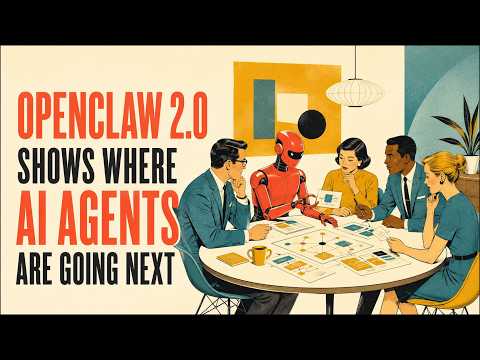
Nathaniel Whittemore examines OpenClaw 2.0 as evidence that AI agents are moving from individual tools toward shared systemsA multi-user agent system lets several people work with the same AI agent or agent service inside shared activities and state.. Instead of treating one agent as a private assistant for one user, the new model emphasizes persistent workspaces, collaborative sessions and agents that can participate in a team's ongoing activity.
The shift changes how people design agent products. Identity, permissions, memory and handoffs have to work across several users, while the agent needs enough context to contribute without exposing private informationData privacy governs how personal, confidential, or sensitive information is collected, used, shared, retained, and protected in AI systems. or becoming another source of coordination overhead.
Whittemore argues that this multiplayer pattern is likely to define the next phase of agent software. The most useful systems will not only complete tasks, but also remain available across timeA stateful agent preserves task information across multiple events and model calls so its AI behavior can continue coherently over time., understand shared goals and help groups coordinate workHuman-AI collaboration combines human judgment and accountability with AI speed, generation, analysis, and tool use in a shared workflow. that previously depended on separate chats and manual updates.
 Watch on YouTube