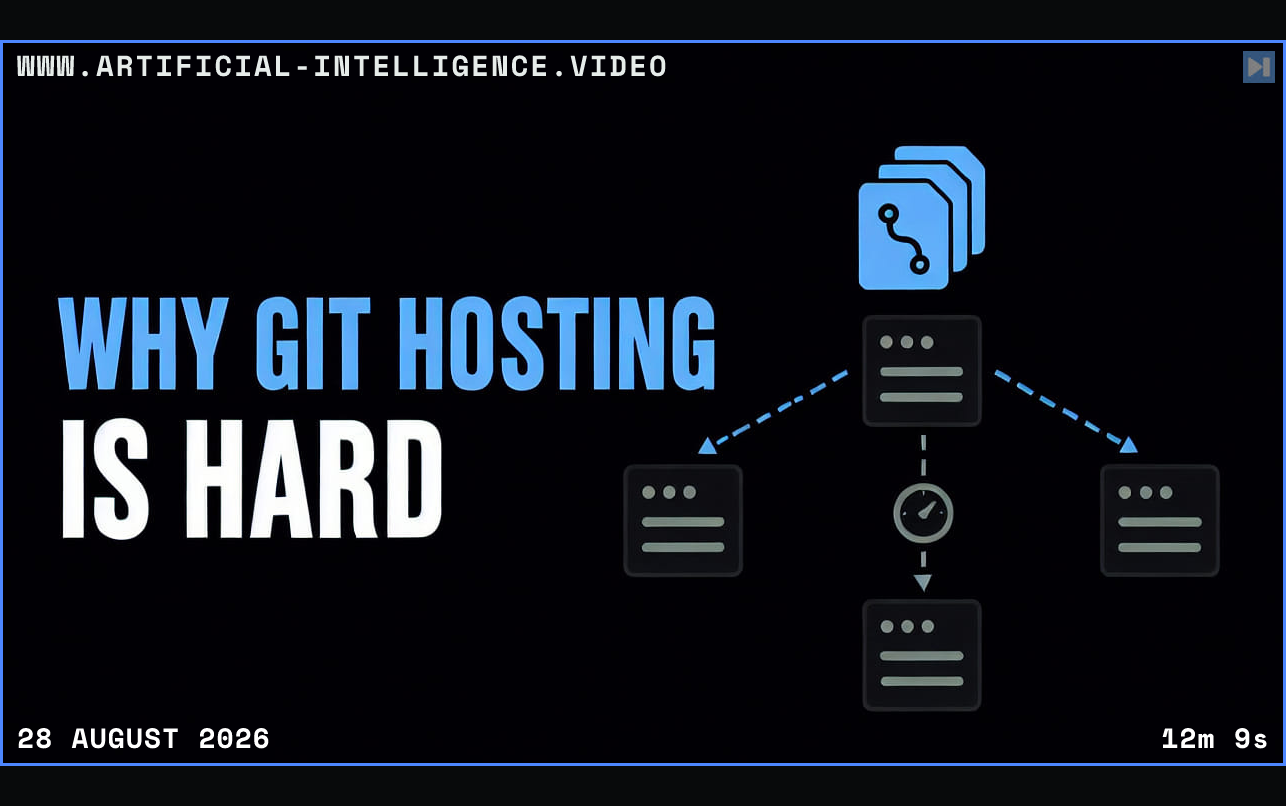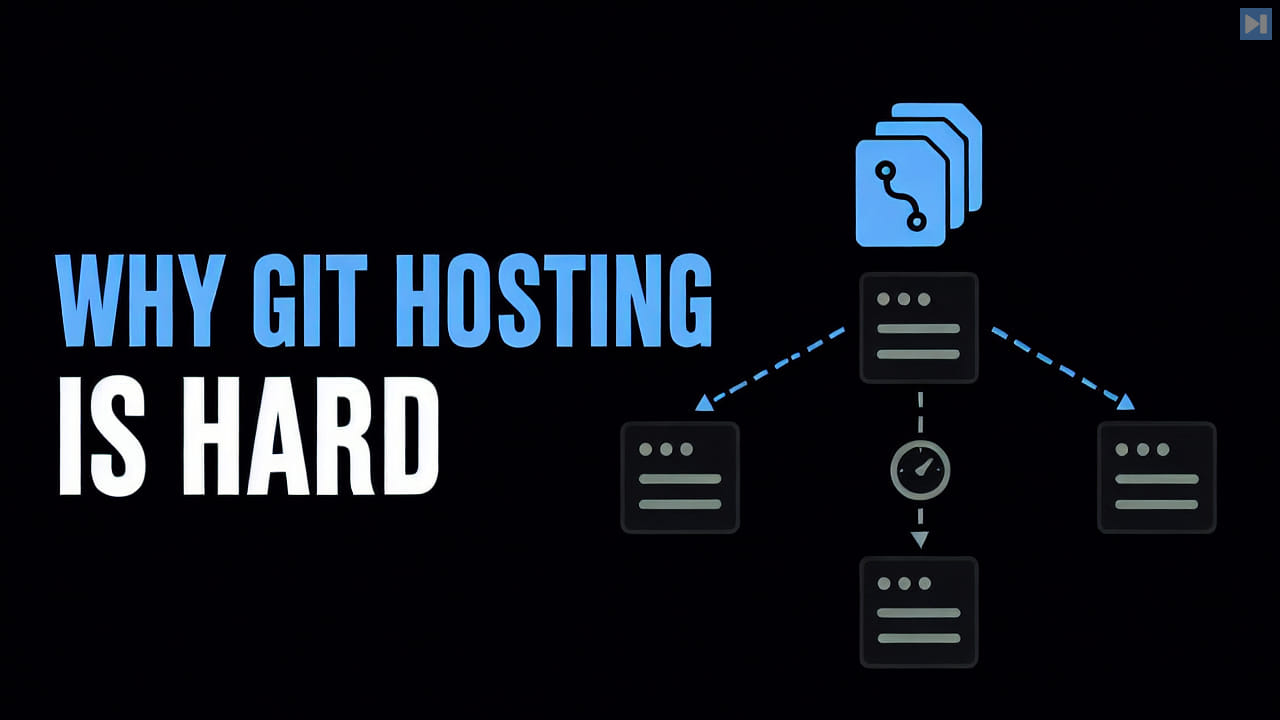
The video begins with Git's object modelThe Git object model stores repository history as content-addressed commits, trees, blobs and annotated tags connected by hashes.: commits point to trees and blobs, and clients exchange groups of those objects as packfilesA Git packfile is a compressed container that stores many Git objects together, often using delta compression for efficient transfer and storage.. A key-value store looks attractive because every object has a content hash, but reconstructing a commit can require thousands of dependent lookups, making clone performance impractical at large scale.
Traditional Git hosts therefore keep complete repositories on local disks and replicate them across several machines. Reads can go to any replica, but writes require transferring packfiles and coordinating prepare, lock and commit phases. As the number of replicas and requests grows, the chance of one slow tail response rises sharply.
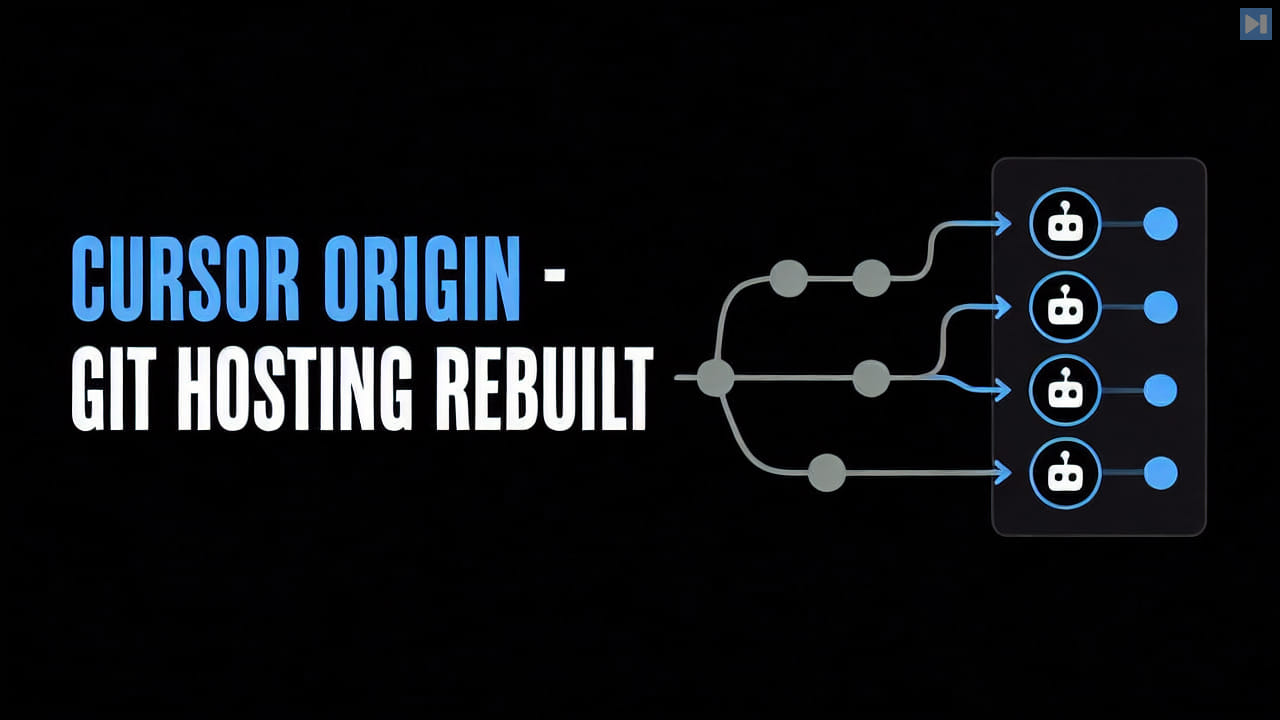
Cursor's Continuity architecture instead records repository changes in a write-ahead logA write-ahead log records ordered changes durably before those changes are applied to the main materialized state. backed by object storage. A worker can rebuild Git state from that ordered log, while rendezvous hashingRendezvous hashing assigns each key to the available node with the highest deterministic score, minimizing reassignment when nodes change. assigns repositories to workers without a permanent primary node or a consensus vote across fixed replicas.
This design reduces the storage and coordination burden for millions of mostly inactive repositories while preserving the ability to restore them quickly when needed. The host also notes that compaction keeps the log manageableLog compaction reduces an append-only log by preserving the state or records needed for recovery while removing superseded history. and reports Cursor's claim of handling 16,000 commits per minute. The Linear sponsorship segment is omitted from the analysis.
 Watch on YouTube