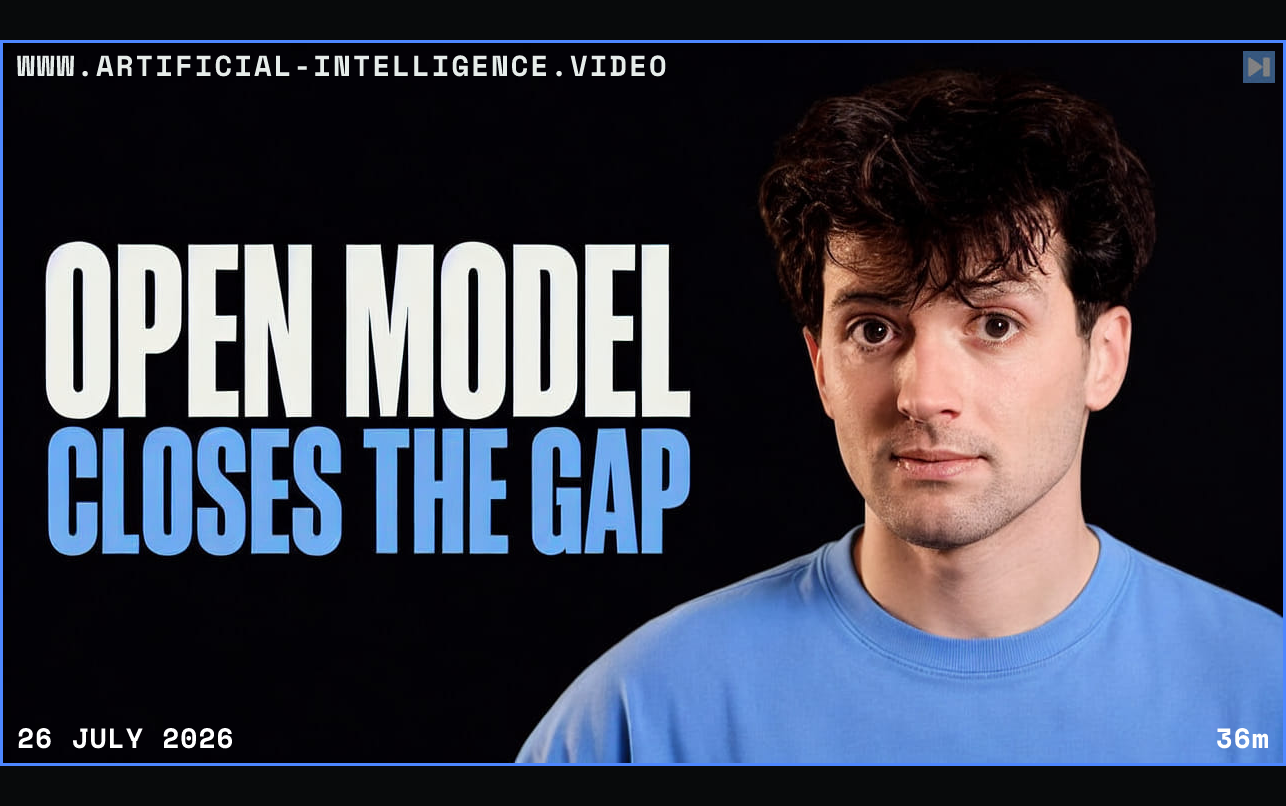
Theo Browne reviews Kimi K3 as a competitive open-weight model that can match or beat closed frontier systems on selected coding, 3D and cybersecurity tasks. He argues that its performance cannot be explained by benchmark optimization or distillation alone, although it remains less token-efficient than leading OpenAI models and can require substantial hardware to serve.
The episode explains distillation as training a smaller model from the outputs of a stronger one. Browne distinguishes ordinary learning from paid model outputs and covert large-scale access that circumvents provider restrictions, while questioning claims that Kimi K3 could have been trained mainly from a newly released Anthropic model within its short development timeline.
Kimi K3 also sharpens the policy tradeoff around open weights. Downloadable frontier-class models give developers control, competition and unrestricted defensive security tools, but the same capabilities can help attackers once weights cannot be recalled. Browne expects the pressure to force American labs toward better prices and faster releases while governments consider testing and restrictions for increasingly capable open models.
 Watch on YouTube