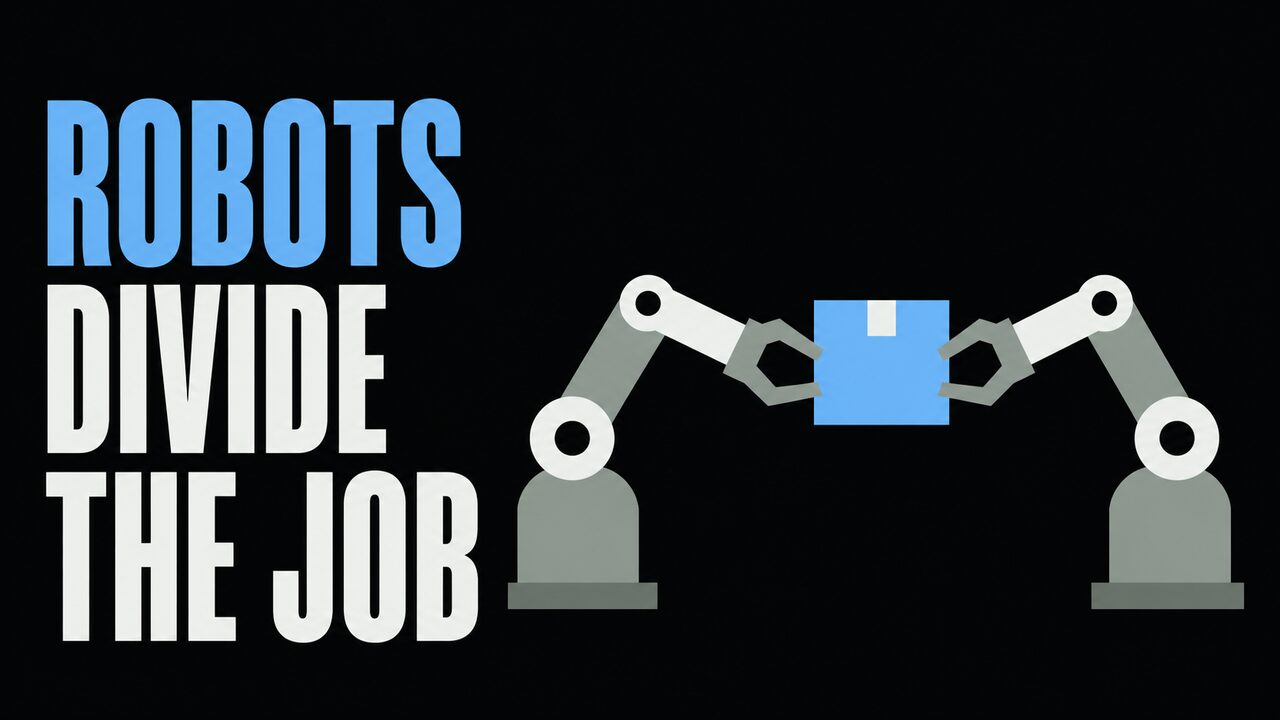
A bimanual robot can divide a manipulation task between two arms, such as holding a container steady while closing it or positioning several objects together. Coordinated control must manage the motion, force and collision constraints of both arms.
Two arms increase dexterity but also make planning more complex. The system needs to decide which arm performs each part, maintain a shared object model and prevent the arms from interfering with one another.
ELI5
A bimanual robot has two arms that can work together on the same task. It can hold something steady with one arm while the other arm moves, turns or connects it.
For example, the robot might hold a jar with one hand and screw on the lid with the other. Two arms provide more flexibility, but the control system must plan both motions, coordinate force and stop the arms from colliding.
What can a bimanual robot do that a single-arm robot cannot?
It can stabilize and manipulate at the same time, coordinate two grasps and perform tasks that require simultaneous support or assembly.
Why is bimanual robot control difficult?
Both arms share space and may act on the same object, so motion, force, timing and collision constraints must be coordinated continuously.