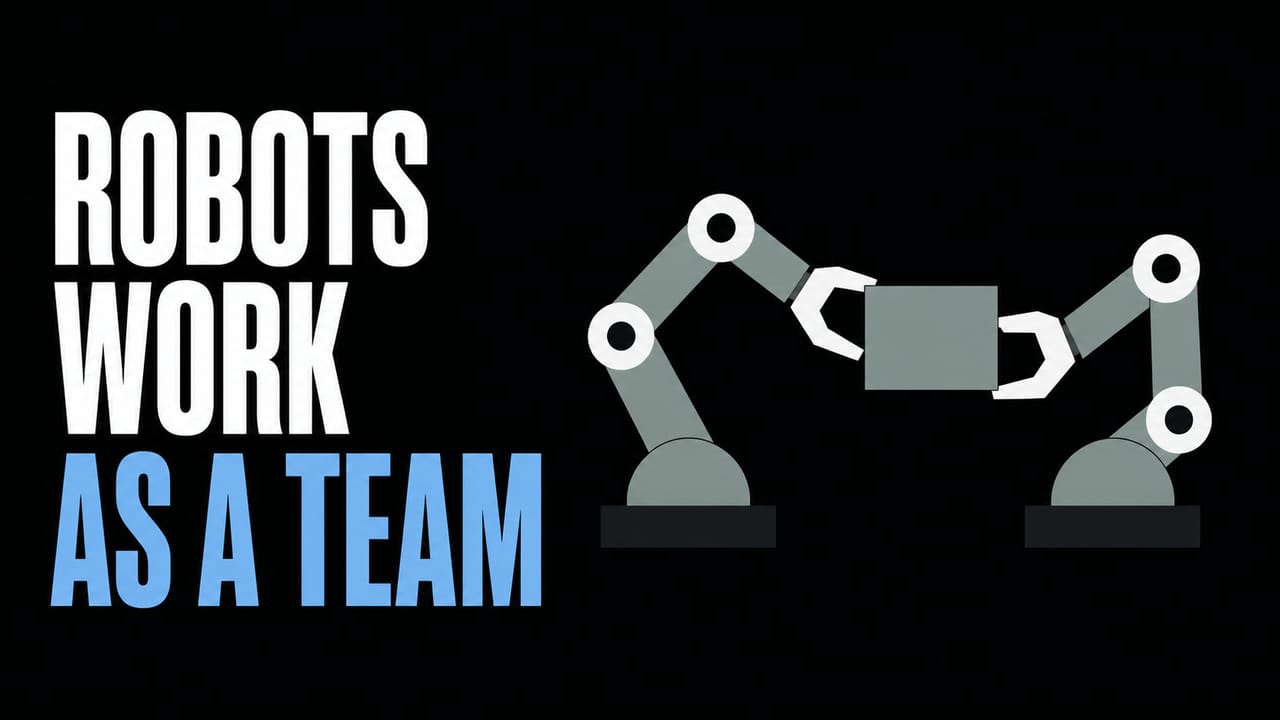
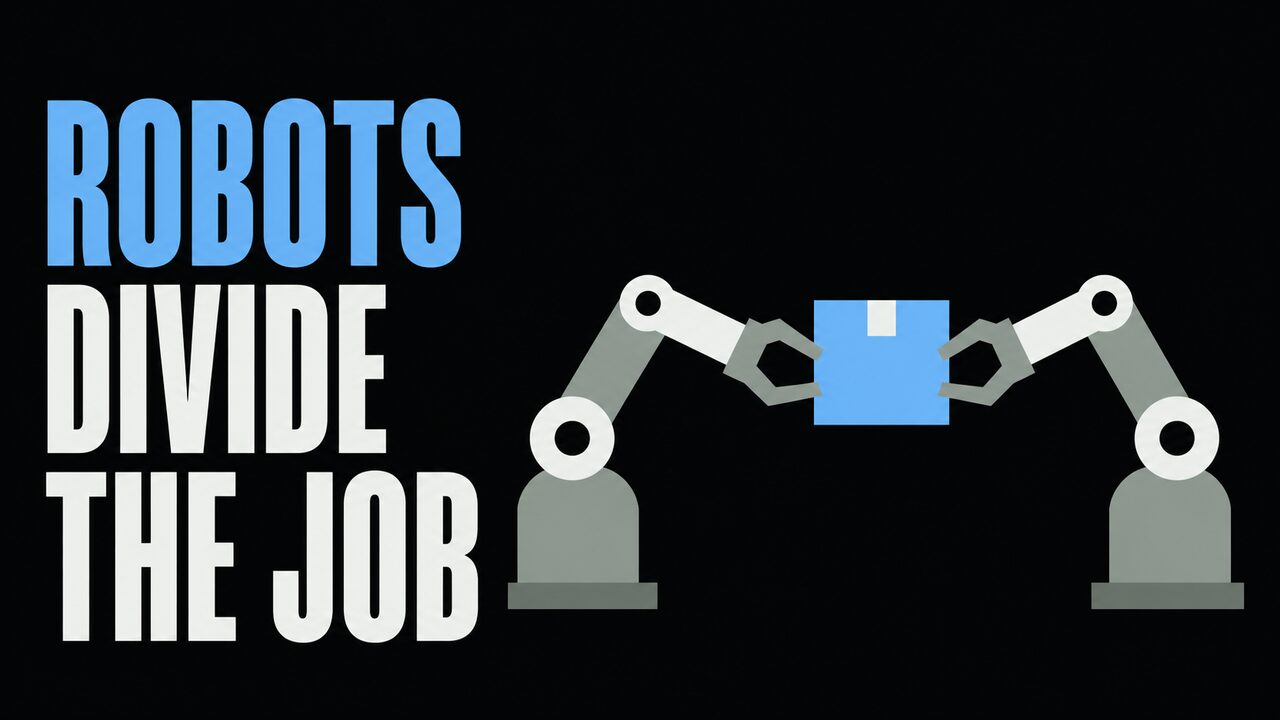
Multi-robot task allocation chooses which machine should perform each stage. The decision can use mobility, manipulation precision, tools, position, duration and dependencies so specialized robots contribute where they add the most value.
Allocation can change during execution when the workflow reaches a new stage or a robot fails. Explicit responsibility prevents duplicated actions and makes completion or reassignment visible to the team.
ELI5
Multi-robot task allocation decides which robot should handle each part of a shared job. It considers the robots' tools, locations, abilities, workload, and the order in which tasks depend on one another.
For example, a mobile robot can carry a part to a workbench while a precise robot arm performs assembly. If one robot fails, the system may reassign its task while keeping responsibility and progress visible.
How does a robot team decide who performs a task?
A coordinator or distributed negotiation can compare robot capabilities, cost, position, availability and task dependencies before assigning responsibility.
Can multi-robot task allocation change after work begins?
Yes. A team can reassign later stages when conditions, availability or required capabilities differ from the original plan.