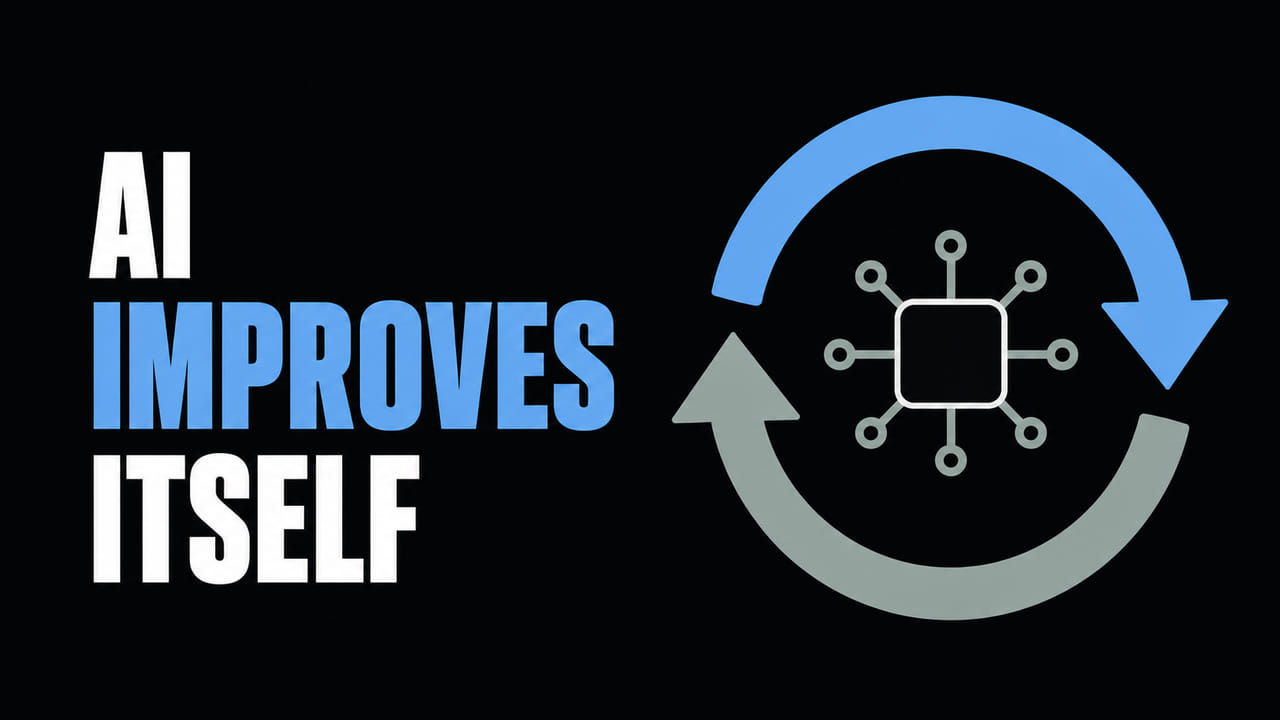
Recursive AI improvement can involve models helping optimize serving stacks, kernels, research code, experiments, evaluation, data, or training. Verified gains can make later development or inference faster, cheaper, or more capable, creating another opportunity for AI assistance.
The loop is not automatically unbounded. Verification, compute, data, experiments, human judgment, physical infrastructure, safety controls, and diminishing returns constrain how quickly generated ideas become reliable improvements.
ELI5
Recursive AI improvement is a loop in which AI helps build or optimize better AI systems, and those improved systems then help with the next round of work. The assistance might affect research code, serving software, data, experiments, evaluations, or hardware kernels.
For example, an agent could generate a faster compute kernel, tests verify the speedup, and the improved system then runs later experiments more cheaply. The loop remains limited by verification, compute, data, physical infrastructure, human judgment, safety, and diminishing returns.
Is model-assisted infrastructure optimization recursive AI improvement?
It is a practical form when AI produces verified infrastructure gains that make later AI development or serving more effective.
What limits recursive AI improvement?
Verification, experiments, compute, data, infrastructure, coordination, safety, and diminishing returns can all slow the feedback loop.