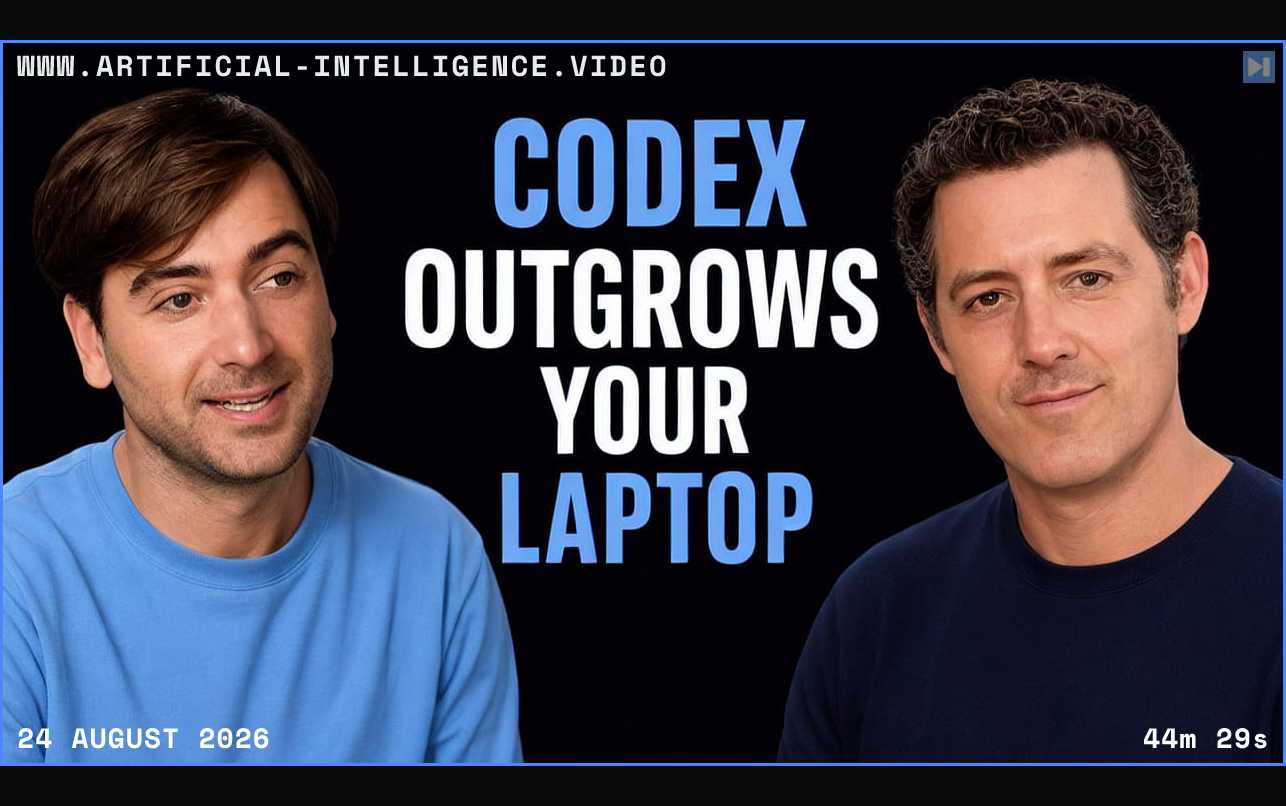
Sottiaux contrasts OpenAI's product culture with his earlier work at Google DeepMind, arguing that close collaboration between research and product teamsAI research-product integration connects model research closely with product design, engineering, deployment, and user feedback. makes it easier to ship quickly while preserving a coherent user experience. He says future models will keep revealing capabilities that reshape how products should be organized.
For Codex, the current friction includes manually maintained skill files, imperfect memory and the cognitive overhead of monitoring many parallel agents. Sottiaux describes a personal agent that understands the user's goals, team context and routines, then decides when to act, when to waitA proactive AI agent initiates relevant work or communication from goals and events instead of waiting for a direct prompt every time. and how to present results without exposing its internal orchestrationAgentic workflow abstraction hides low-level model, tool, and coordination steps behind a simpler goal-oriented interface..
A laptop becomes a limiting environment when models can run many tools and applications concurrently. Cloud agents can explore, compile, test and evaluate alternatives in parallel, while faster inference keeps a user in the flow for tasks such as prototyping. Tool calls and network latencyAI agent tool-call latency is the elapsed time added when an agent invokes, waits for, and processes a tool or external service. still reduce the headline speedup for more interactive workloads.
The interview also connects lower inference costs to model-assisted infrastructure work. Sottiaux says stronger models help optimize serving stacks and specialized kernels, which increases speed and throughput within a similar compute envelope. He treats those gains as a practical form of recursive improvementRecursive AI improvement is a feedback process in which AI helps develop better AI systems that then contribute to further improvement. and expects today's premium speeds to move closer to the default over time.
 Watch on YouTube