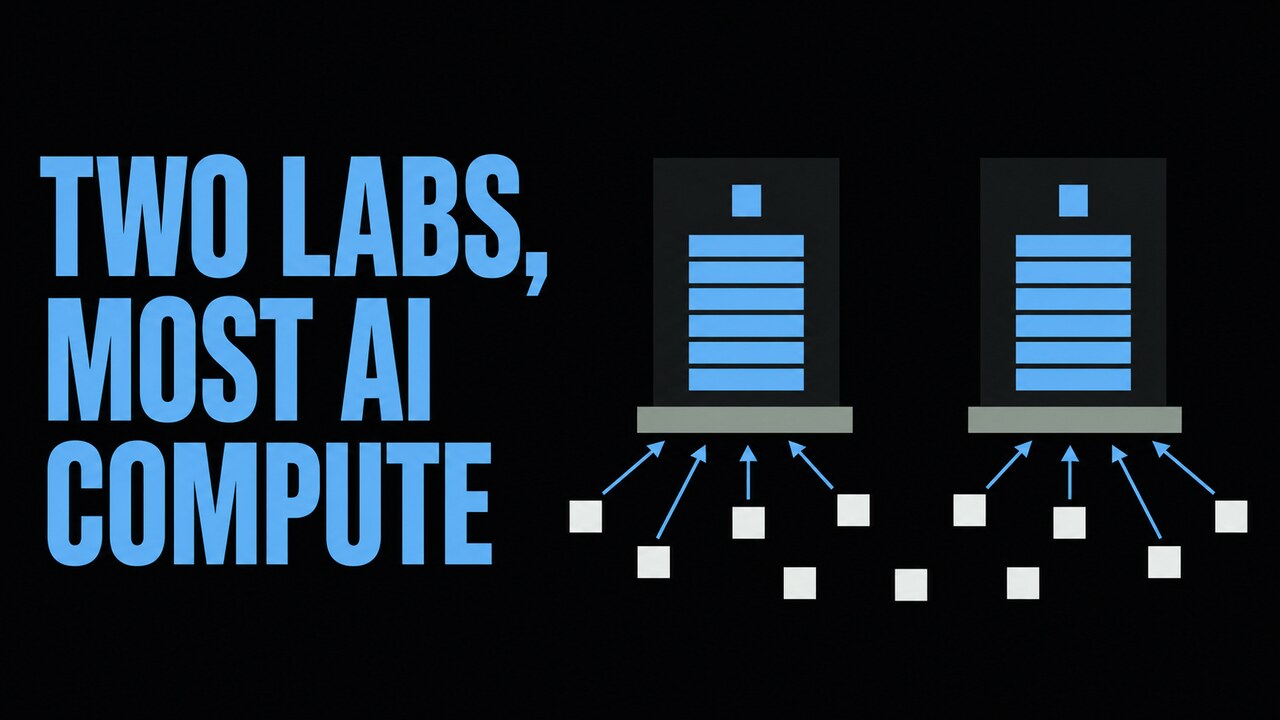
AI research compute supports exploratory training, architecture experiments, data studies, safety research, evaluations, and optimization before a system becomes a production service. It may use the same accelerators as inference but has different scheduling, scale, interconnect, and iteration requirements.
Profitable inference can finance more research compute, while successful research can create models that earn more inference revenue. This feedback creates an advantage for organizations that combine demand, capital, infrastructure access, and the ability to convert experiments into deployed improvements.
ELI5
Research compute is computing capacity reserved for experiments that develop future AI systems. It supports training trials, architecture changes, data studies, evaluations, safety work, and performance optimization.
For example, a lab may use a cluster to test several new model designs before choosing one for a larger training run. Faster experiments help only when results are recorded carefully enough to guide the next decision.
How is AI research compute different from inference compute?
Research compute supports experiments and model development, while inference compute runs trained models to produce outputs for users and applications.
Why do AI laboratories need internal research compute?
Reserved capacity lets researchers iterate without depending entirely on production demand or uncertain short-term access to external hardware.