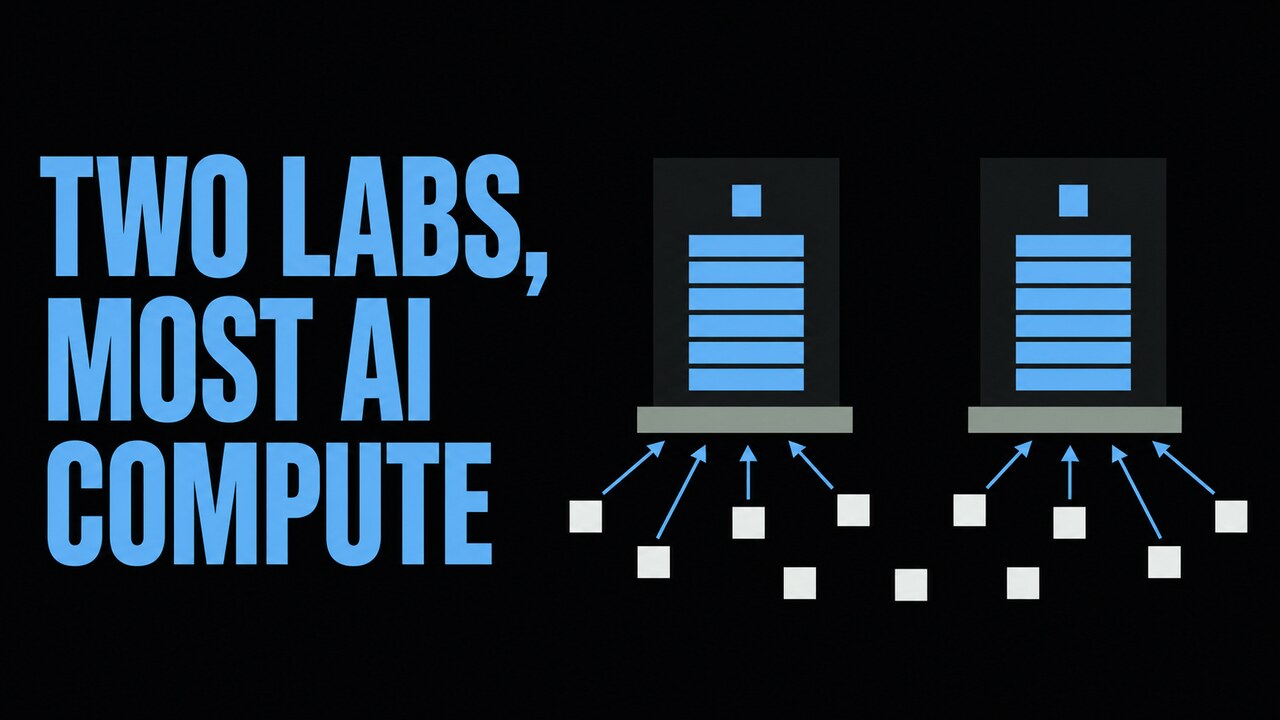
The video draws on a discussion between SemiAnalysis founder Dylan Patel and interviewer Dwarkesh Patel about the concentration of AI infrastructureAI compute concentration occurs when a small number of organizations control a large share of the infrastructure capable of training or serving advanced models.. Dylan estimates that OpenAI and Anthropic could consume 40 to 50 percent of newly deployed compute in the near term, with newer chips adding more performance per watt than the older installed base. If that trajectory persists, the two labs could control a majority of usable frontier computeFrontier AI compute is the high-end computing capacity used to train or operate the most capable AI models available at a given time. by the end of the decade.
A key economic force is how the labs allocate that capacity. Instead of using every new megawatt to serve external tokens, they can direct more compute toward internal model research. Better models can raise future revenue and improve the next training cycle, creating a flywheelAn AI compute flywheel is a reinforcing cycle in which compute improves models, stronger models create value and that value finances more compute. in which the labs that can extract the most value from compute can also afford to bid the most for additional capacity.
The argument is not presented as inevitable. Safety requirements and regulation may delay the release of stronger models, weakening revenue growth and the labs' ability to outbid other buyers. Physical infrastructure is another constraint: servers are only part of the bill, while data centers, power generation, networking and semiconductor supply must be financed and built years ahead of deployment.
Dylan and Dwarkesh connect compute concentration to future labor concentration. If systems become capable of completing full jobs and the effective AI population at frontier labs grows much faster than the human workforce, a small number of organizations could control an extraordinary share of productive digital laborAI digital labor is productive work performed by AI systems that can complete tasks or roles ordinarily carried out by people.. The video treats that outcome as a serious governance risk while acknowledging that politics, credit markets, energy supply and public opposition may interrupt the projected curve.
 Watch on YouTube