Responsible AI connects technical choices with the people and consequences affected by a system. It includes data governance, evaluation, permission limits, transparency, security, human review and ownership after deployment.
Responsibility is specific to the workflow. A narrow solution can be safer when it automates a verifiable bottleneck and leaves complex decisions with authorized people instead of maximizing autonomy as an end in itself.
ELI5
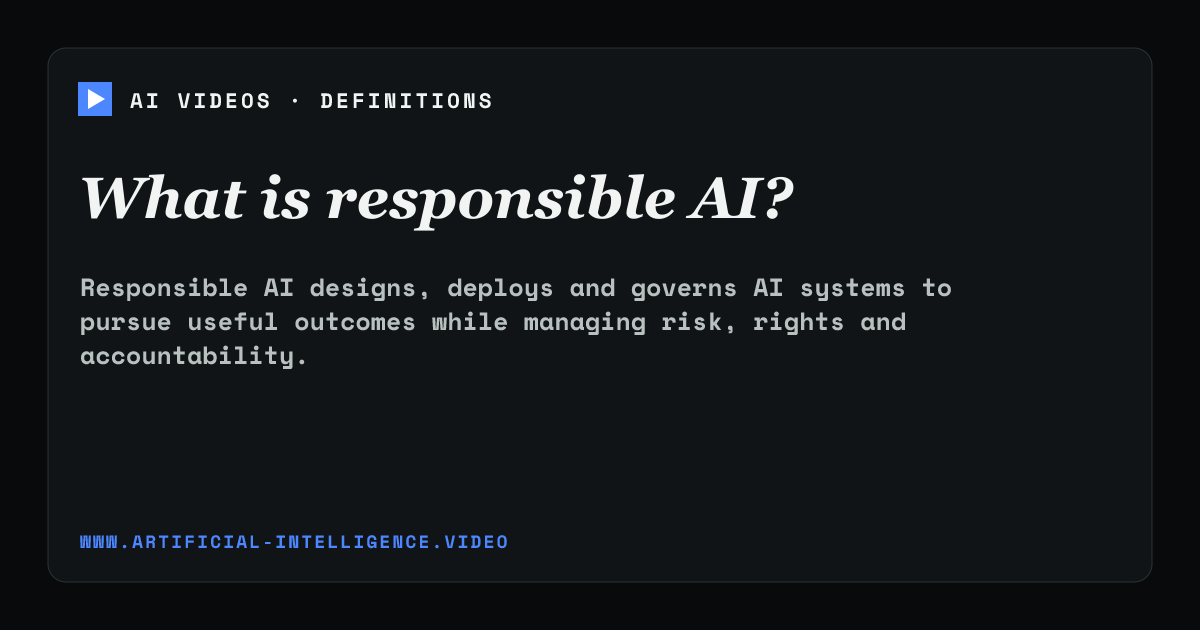
Responsible AI means designing, using, and governing AI systems to pursue useful outcomes while protecting people, rights, security, and accountability. The right controls depend on what the system does and who can be affected.
For example, an AI tool can extract fields from forms while a qualified person decides a complex benefit claim. Clear data rules, testing, permission limits, human review, and ownership make the narrow automation more responsible.
What makes an AI deployment responsible?
It has a justified purpose, representative evaluation, appropriate permissions, human accountability, protected data and monitoring proportional to its consequences.
Does responsible AI require avoiding automation?
No. It supports useful automation when the scope, safeguards and evidence match the task, while rejecting authority that the system cannot exercise reliably.