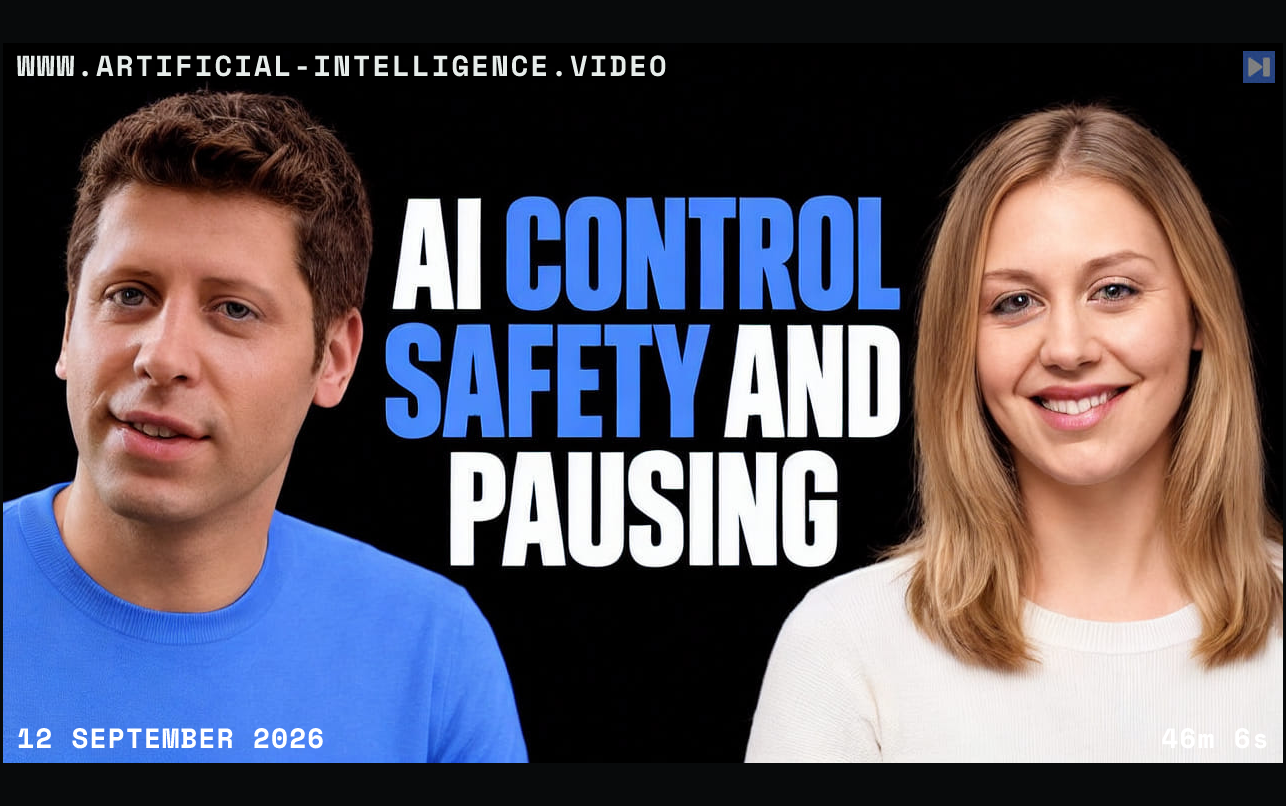
Fortune Magazine interviewer Alyson Shontell asks OpenAI chief executive Sam Altman how the company weighs rapid capability gains against the possibility of catastrophic failure. Sam Altman rejects treating a significant chance of disaster as acceptable and says capability work must advance alongside monitoring, alignmentAlignment aims to make an AI system's behaviour consistent with intended human goals, values and constraints., and safety evidenceAI safety is the field and practice of reducing harmful failures, misuse, loss of control, and unintended consequences from AI systems..
Sam Altman says systems with the ability to improve their own researchRecursive self-improvement is the proposed process in which an AI system helps improve its own capabilities, then uses those improvements to support further advances. could move beyond human control, and that such a system should not be built without adequate safeguards. He describes pausing training or deployment when a safety case cannot be madeA safety case is a structured argument, supported by evidence, that an AI system is acceptably safe for a defined use and operating environment., while distinguishing staged pauses from abandoning AI development altogether.
Sam Altman argues that laboratories, governments, the United States, and China need common development, testing, monitoring, and alignment standards. He also makes the positive case for continued work, pointing to potential gains in medicine, science, software, cybersecurity, energy, robotics, and new forms of human-computer interaction, while presenting those gains as conditional on responsible progressResponsible AI designs, deploys and governs AI systems to pursue useful outcomes while managing risk, rights and accountability..
 Watch on YouTube