Subagents can specialize in exploration, review, testing or another independent responsibility. The parent workflow supplies an objective, relevant context and authority limits, then integrates the returned result.
Delegation must define file ownership, permissions and expected evidence. A read-only exploration subagent can gather information without changing project state, reducing the risk of conflicting edits during planning.
ELI5
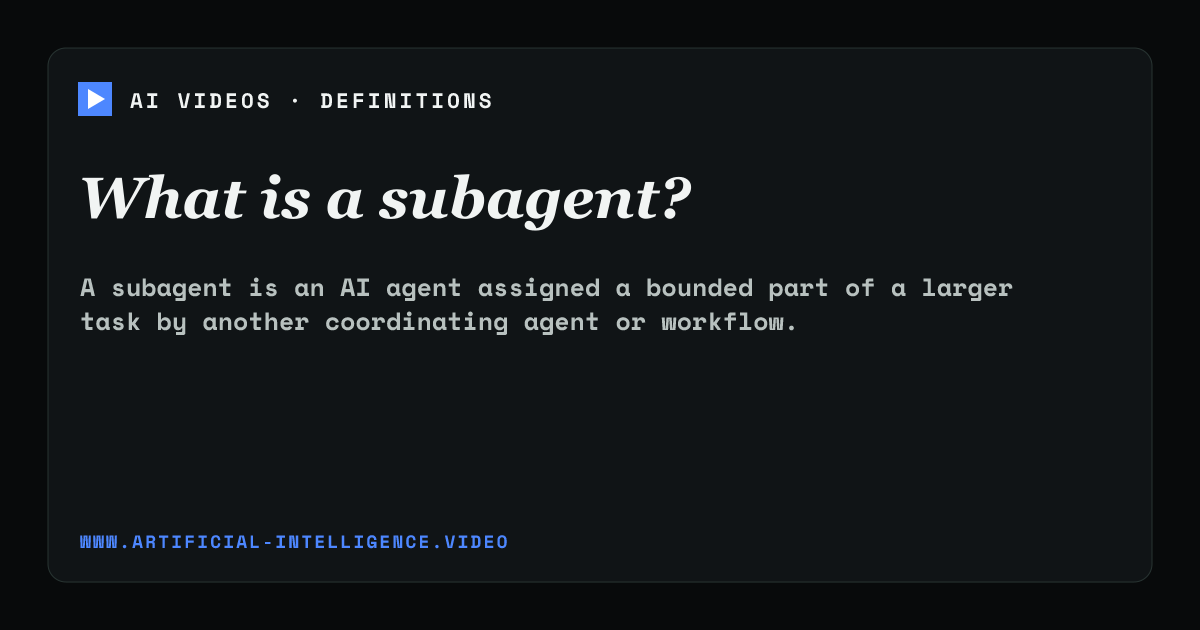
A subagent is an AI agent assigned one bounded part of a larger task. A coordinating agent or process keeps responsibility for the overall result and later reviews the returned work.
For example, one subagent can research security risks while another tests usability. Each receives a clear scope, allowed tools, expected evidence, and reporting format so their work can be checked and combined safely.
Why use a subagent for exploration?
It can investigate a focused question independently while the main workflow retains responsibility for decisions and integration.
What should a subagent assignment specify?
It should specify the objective, allowed resources, write permissions, constraints, expected evidence and final report.