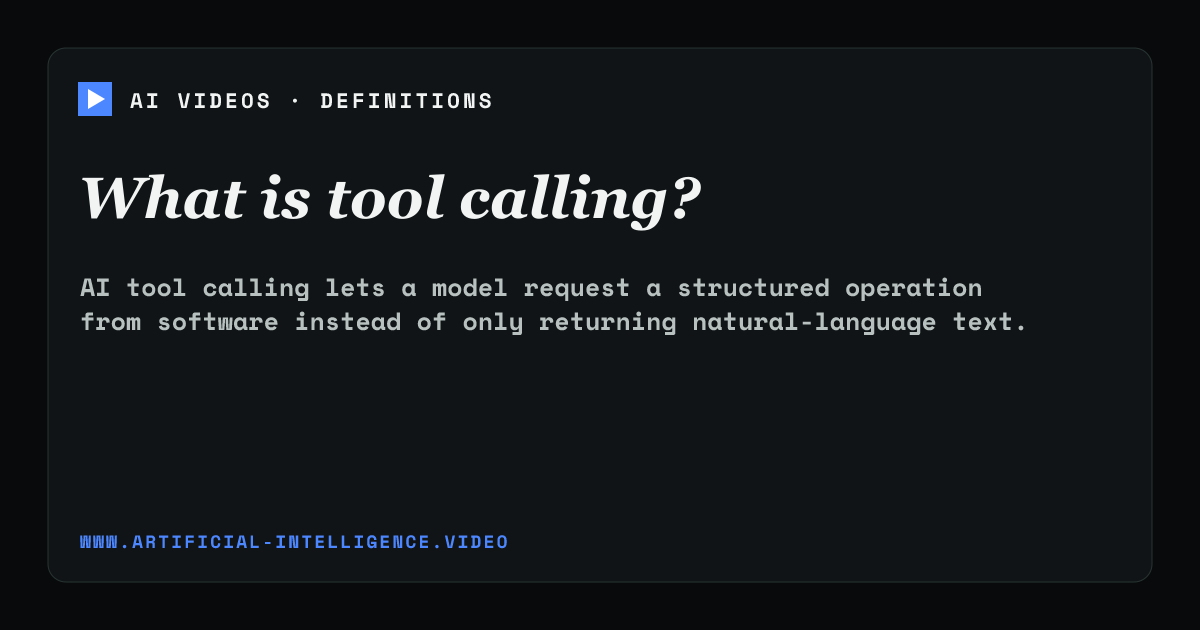
AI tool calling presents a model with named operations and input definitions. The model selects a tool and supplies arguments, the harness executes the operation, and the result returns to the model for the next decision.
Multi-step tool use requires consistent identifiers, valid arguments and recovery from errors. A fast response is valuable only if the model chooses the correct tools and the harness verifies consequential effects.
ELI5
Tool calling lets an AI model ask software to perform a structured action. The model chooses an available tool and provides the needed details, then receives the tool's result before deciding what to do next.
For example, a travel assistant can call a weather tool with a city and date, then use the returned forecast in its answer. The surrounding software should verify important inputs and permissions before carrying out actions with real consequences.
What tools can a coding model call?
A harness may expose file reads, searches, code edits, tests, builds or terminal commands through structured operations with bounded permissions.
Why is tool-calling quality important?
An incorrect tool or argument can corrupt later steps, so agents need reliable selection, clear errors and verification of the resulting state.