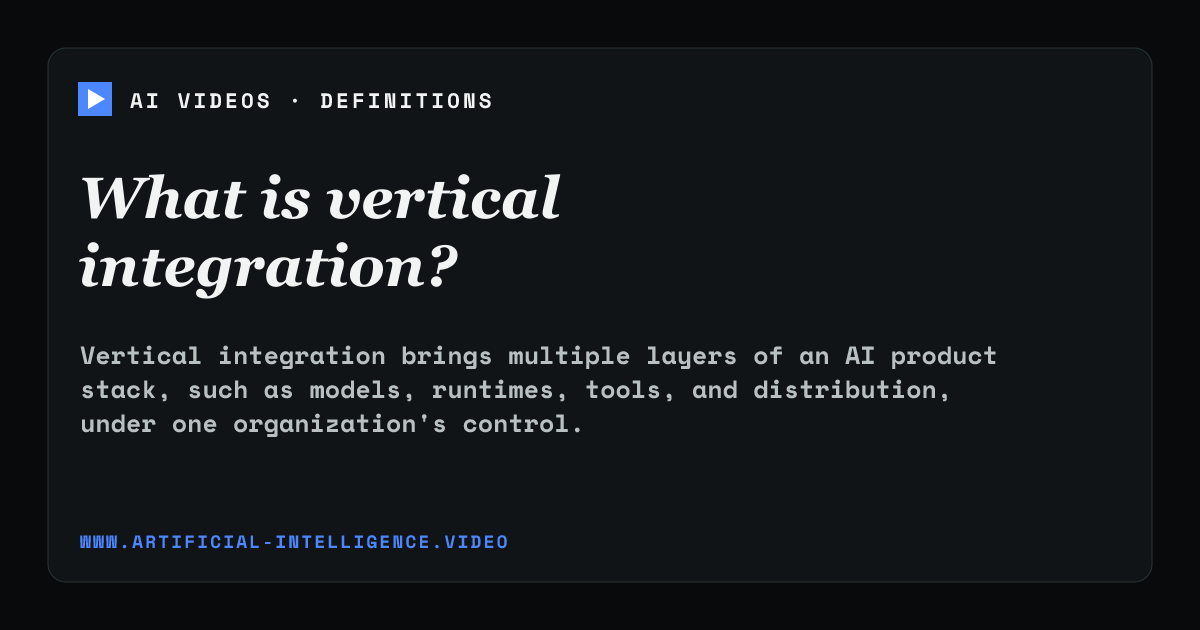
In an AI product, vertical integration can combine model development, serving infrastructure, agent harnesses, coding environments, extensions, billing, and customer distribution. One organization can optimize these layers together and control how capabilities reach users.
Integration can improve consistency and reduce coordination costs, but it can also limit neutral intermediaries and make switching harder. Users should consider data portability, open interfaces, credential ownership, export paths, and whether important workflows depend on one complete vendor stack.
ELI5
Vertical integration means one organization controls several connected layers needed to deliver a product. In AI, that might include building the model, running it, providing the agent tools, and owning the coding application where users work.
For example, a model company may offer its own coding extension and agent harness instead of supplying the model through another platform. The pieces can work closely together, but users may have fewer easy alternatives if one layer changes.
What are the benefits of vertical integration in AI?
It can enable tighter optimization, faster feature delivery, consistent support, unified security controls, and a clearer end-to-end customer experience.
What risks can vertical integration create?
It can increase vendor dependence, reduce interoperability, weaken neutral platforms, and make data, tools, or workflows harder to move elsewhere.