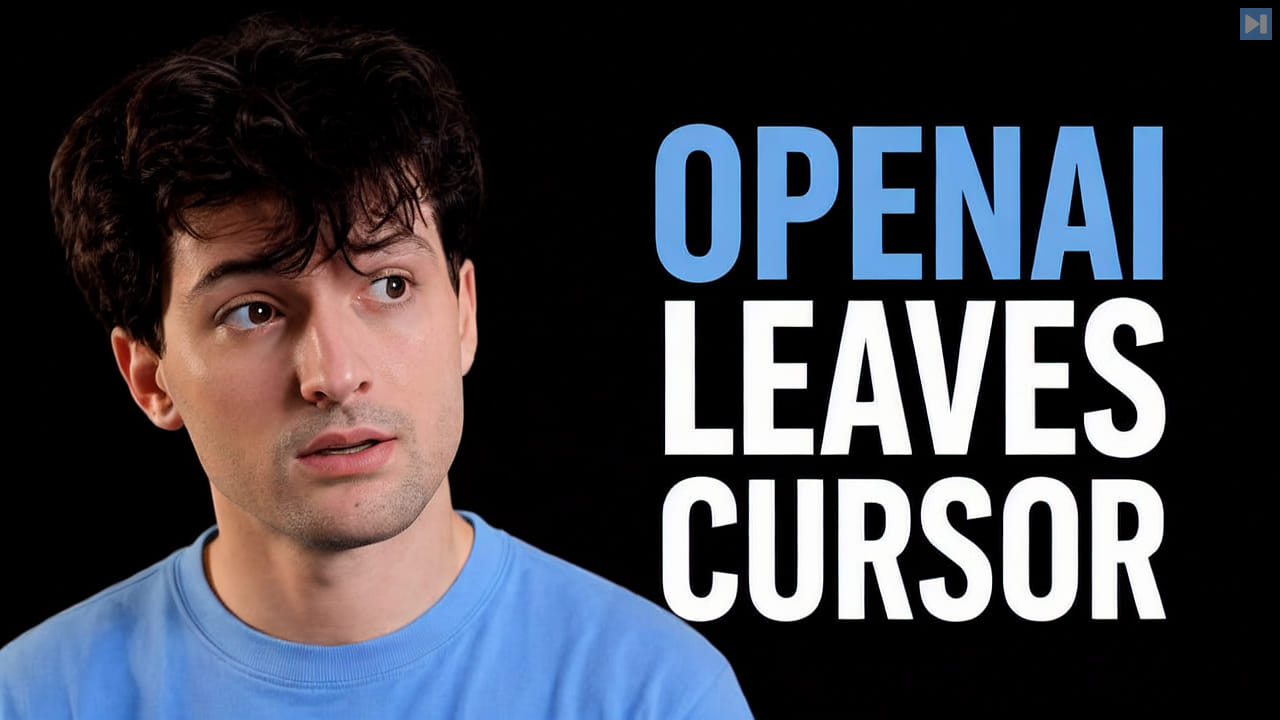
Matthew Berman examines OpenAI's decision to wind down its agreement that supplies bundled models through CursorA model access agreement defines the contractual conditions under which an organization may use, distribute, integrate, or resell access to an AI model. after the coding platform's acquisition by SpaceX. OpenAI points to concerns that Elon Musk's companies may not follow contractual restrictions, including terms intended to prevent model distillationModel distillation trains a smaller or different AI model to reproduce useful behavior from a more capable teacher model or its outputs..
Berman traces the dispute through the long conflict between Musk and OpenAI, then compares it with earlier cases where Anthropic restricted rivals or newly acquired coding platforms from using Claude. He argues that the current split is less unprecedented than it first appears, because frontier labs increasingly protect model outputs from competitors.
Cursor users can still bring their own API keys, use OpenAI's coding extension or connect through compatible gateways. Berman expects more AI companies to integrate models, agent harnesses and coding environments verticallyVertical integration brings multiple layers of an AI product stack, such as models, runtimes, tools, and distribution, under one organization's control., making neutral multi-model platforms harder to sustainA model-agnostic platform supports interchangeable AI models or providers behind one product experience instead of depending on one exclusive model stack.. The sponsored code-review segment and closing channel promotion are omitted.
 Watch on YouTube