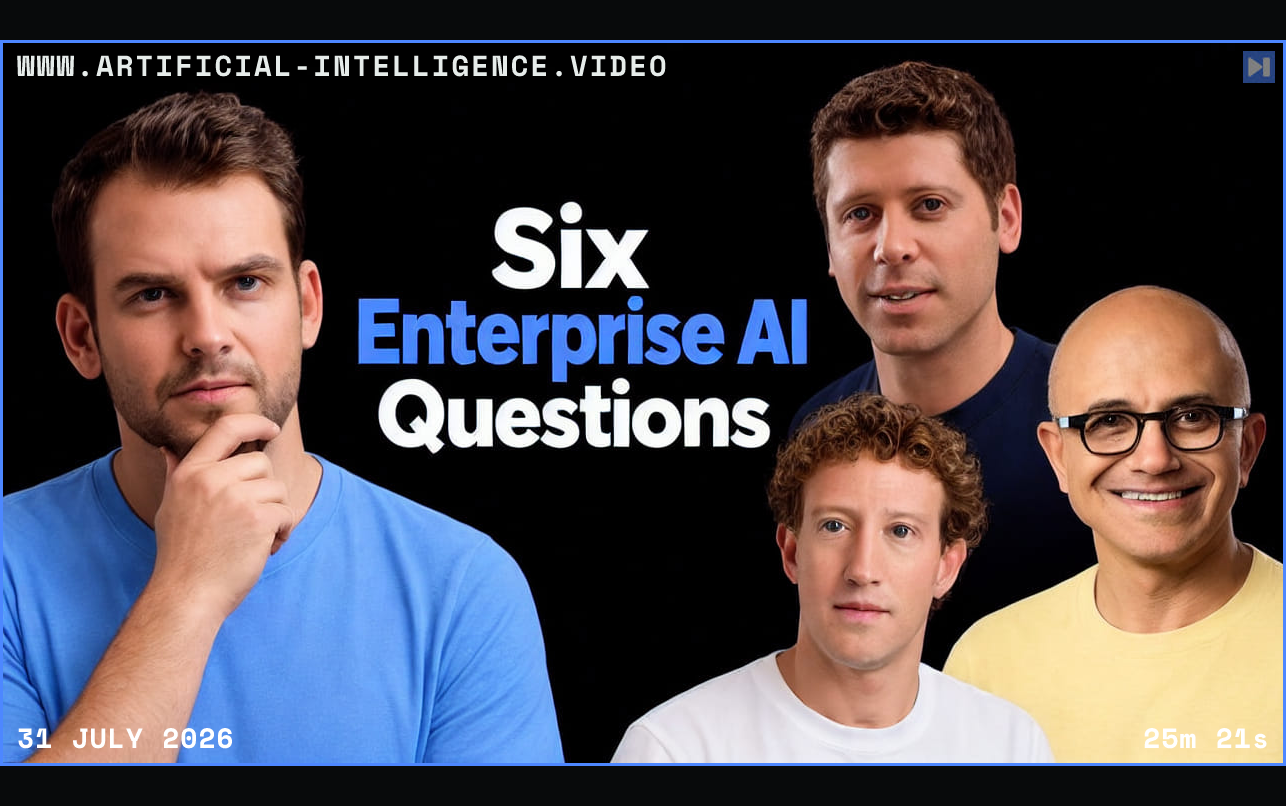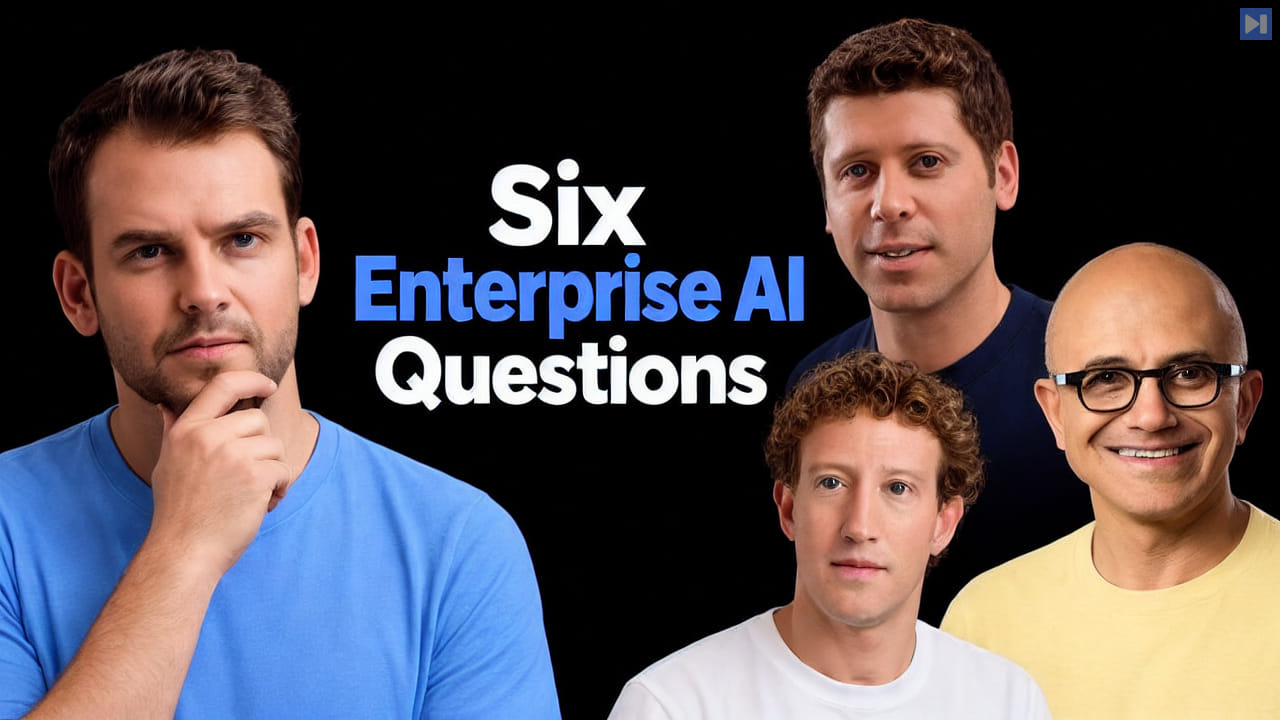
Nathaniel Whittemore opens with reported policy and commercial developments, including Sam Altman's Washington visit, Satya Nadella's case for enterprise control, Mark Zuckerberg's argument for broad AI access and Greg Brockman's comments on AI devices. He uses these headlines to frame debates about capability, access, control and the pace of deployment.
Nathaniel Whittemore argues that enterprises are moving from AI assistance toward managing agents that carry out work. He connects this shift to the importance of agent harnesses and to consumption-based costs, presenting token budgets and observability as operational design problems rather than ordinary software-seat decisions.
Nathaniel Whittemore's first two questions concern redesigning processes for agents and building architectures around them. His framework includes task-appropriate model routing, harness design, access to context and data, system integration and guardrails, with an emphasis on changing workflows rather than attaching AI to existing processes.
Nathaniel Whittemore's next two questions concern allocating AI costs and enabling the workforce. He argues that organizations need visibility into usage and outputs to decide which teams receive which capabilities, alongside practical training and collaboration that helps nontechnical workers manage agents responsibly.
Nathaniel Whittemore closes with questions about changing business models and designing for continuing change. He discusses outcome-based pricing, new services and persistent work, while arguing that architectures must adapt as models, harnesses, customer expectations and policy evolve.
 Watch on YouTube