AI workforce transformation often changes the contents of jobs before it removes whole occupations. Models automate some tasks, expand the range of work a person can attempt and alter which skills create the most value inside a team.
Visible labor-market effects depend on adoption, reliability and organizational redesign as well as model capability. Firms may preserve existing roles when only part of a task bundle is automated, while larger change can occur when an AI-native organization is built around different workflows.
ELI5
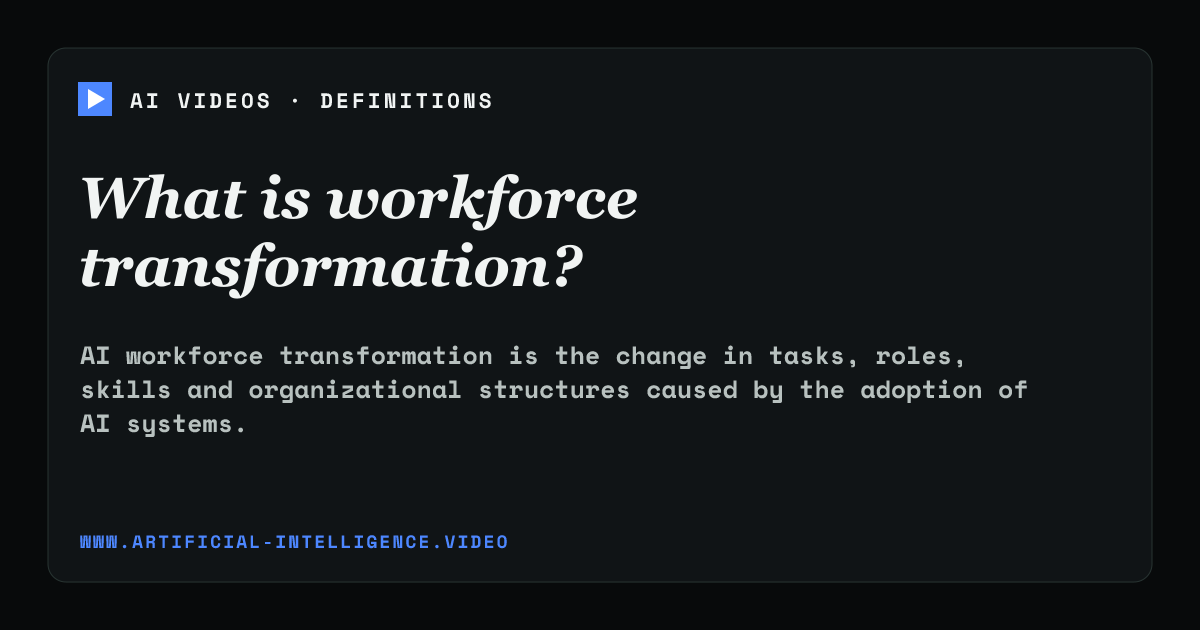
Workforce transformation is the change in tasks, roles, skills, and team structures caused by adopting AI. Jobs often change piece by piece before an entire occupation disappears.
For example, a support worker may spend less time drafting routine replies and more time handling complex cases and checking automated results. The size of the change depends on reliability, adoption, training, and how the organization redesigns work.
Why can AI improve rapidly without increasing unemployment?
Jobs contain many connected tasks, adoption takes time and people can use partial automation to expand output rather than eliminate the complete role.
What could cause larger workforce disruption?
More reliable task coverage and organizations redesigned around AI could change staffing and role boundaries more deeply than adding tools to old processes.